

Event Permits in NYC:
A Practical Compliance Checklist for Brand Activations
Permits come up late in almost every activation conversation. A brand books a venue, locks a date, approves a design, and then, somewhere in week two of production prep, someone asks whether the tent over 400 square feet needs a Department of Buildings filing. It does. It has always needed one. The question just arrived too late.
In New York City, event permits don't operate on a single track. Depending on where your activation lives, including private retail floors, public plazas, sidewalks, and rooftops, and depending on what it involves (amplified sound, open flame, a structure, a crowd over 74 people), you may be dealing with SAPO, FDNY, DOB, NYPD, NYC Parks, or some combination of all five.
Understanding that landscape before you commit to a timeline is not optional. For high-end brands, it's a baseline expectation. Any activation that creates a compliance incident, however minor, becomes a reputational problem before it becomes a legal one.
This checklist walks through the permit categories, regulatory agencies, structural thresholds, ADA requirements, insurance standards, and security planning frameworks that govern brand activations in New York City. It's organized for production teams and brand-side marketers who need to scope compliance early, not patch it at load-in.
Why NYC's Permit Landscape Is Different From Every Other City
New York City does not have a single permitting authority for outdoor brand activations. That's the first thing to understand, and the one most likely to create timeline problems if you've produced events in simpler regulatory environments.
In most cities, a promotional outdoor event routes through one or two municipal offices. In NYC, a mid-scale activation on a public sidewalk or plaza can involve five or six, each with its own documentation requirements and its own dependencies on what other agencies have already approved. Those dependencies run in sequence, not in parallel — which is what makes NYC timelines so unforgiving.
The practical implication: permit lead times here are significantly longer than most production teams expect, and the consequences of missing a filing window cascade. An application submitted out of order doesn't just delay one permit - it can freeze the entire chain.
Build permitting into discovery, not pre-production. By the time you're scheduling load-in, these filings should already be in motion.
What Type of Permit Does Your Brand Activation Actually Need?
The right permit category depends on your activation's physical footprint, location type, and programmatic elements. The four primary permit tracks for brand activations in NYC are:
Street Event Permit (SAPO):
Required for any commercial or promotional activity on a city street, sidewalk, curb lane, or pedestrian plaza. This includes tents, tables, banners, red carpet, rope and stanchions, and vehicle displays. Even a single promotional table on the sidewalk requires one.
Apply through CECM's E-Apply portal. Note that a SAPO permit is often the master permit. Other agency approvals (DOB, FDNY, NYPD sound) must be obtained before SAPO can issue its permit. Lead times range from 10 to 60 days depending on event scale.
NYC Parks Special Event Permit:
Required for any activation on park property, including rooftops within park jurisdiction, plazas managed by NYC Parks, and waterfront spaces under Parks Department authority.
Applications are submitted through the NYC Parks Department's online portal at least 21 days before the event.
Temporary Use Permit (TUP) from NYC DOB:
Required when your activation includes a temporary structure : tent over 400 square feet, stage or platform exceeding 120 square feet, scaffolding over two feet in height, or any structural element that requires an Alteration Type 2 or 3 filing.
A registered design professional (licensed architect or PE) must submit the application to TempUse@buildings.nyc.gov at least 15 business days before construction begins.
Temporary Place of Assembly (TPA) Certificate of Operation:
Required when an interior or exterior space will host 75 or more people indoors or 200 or more people outdoors, and the event lasts less than 30 days. DOB reviews and FDNY inspection are part of this process.
Written requests must be submitted at least 10 business days before the event. For events over these thresholds, TPA approval is not optional regardless of whether the space is a private retail environment or a purpose-built outdoor footprint.

One important distinction: private venue activations (inside a retail store, gallery, or private commercial space) generally bypass SAPO but are still subject to DOB occupancy codes, FDNY fire safety requirements, TPA thresholds, and ADA standards. The permit track changes; the compliance requirements don't disappear.
What Each Agency Actually Controls
Knowing which permit you need is one thing. Knowing which agency owns what, and in what order to approach them, is where most production timelines go wrong. Here's the agency map:
SAPO / CECM
Issues street event and plaza event permits for commercial and promotional activities on NYC streets and sidewalks. The master coordinator for complex multi-agency events. The critical detail: SAPO is almost always the last permit issued, not the first. DOB and FDNY approvals must be in hand before SAPO will issue its permit. Applications submitted through E-Apply.
FDNY (New York City Fire Department)
FDNY handles generator certifications, tent and membrane structure approvals, and Temporary Place of Assembly inspections. For generators over 40kW, DEP also requires certification. FDNY coordinates with DOB on structural filings and charges hourly inspection fees for TPA events. It's often the longest-lead dependency in the permit chain for events with significant builds.
DOB (Department of Buildings)
Issues Temporary Use Permits for structures and Temporary Place of Assembly Certificates of Operation. Requires a registered design professional for all TUP applications. Filings are submitted through DOB NOW. Fees are paid at any DOB borough office and must be confirmed within 48 hours of receiving a TUP number.
NYPD
Issues amplified sound permits, required for any background music, live performance, or PA system at an outdoor event. Sound permit applications are filed at the local precinct. Standard lead time is five days. The fee is $45. Sound permits expire at 7 PM in residential-adjacent areas, a production detail worth confirming early if your activation includes an evening program. NYPD also issues parade permits for any procession of 25 or more people on a public street.
Capacity Codes, Egress, and the Rules Nobody Reads Until It's Too Late
Occupancy limits and egress requirements are the compliance layer that production teams most frequently underestimate. Not because they're obscure, but because they feel like someone else's problem until they aren't.
Occupancy limits in temporary event spaces are determined by FDNY and DOB based on square footage, egress path widths, furniture configuration, and sprinkler coverage. For retail activations inside existing stores, the store's Certificate of Occupancy already specifies a maximum occupancy figure for that floor. A pop-up installation that narrows aisles, adds fixtures, or changes the room configuration can push the effective occupancy below that number. The baseline figure in the CO is not a safe assumption when the layout has changed.
Egress requirements under NYC Building Code specify minimum aisle widths, maximum travel distances to exits, and door hardware standards. Temporary structures under DOB jurisdiction must conform to structural strength, fire safety, and egress requirements per NYC Administrative Code §28-111.2.
For tent structures housing 50 or more occupants, a detailed site and floor plan showing egress paths, seating capacity, and heating and electrical equipment is required with the FDNY permit application.
A few thresholds worth building into your spatial planning from the start:
- Tents over 400 square feet require FDNY approval and DOB coordination
- Structures (stages, platforms) over 120 square feet and over two feet in height require DOB filing
- Any space hosting 75+ indoors or 200+ outdoors triggers TPA requirements
- Fire apparatus access roads must remain clear around tent structures : a 20-foot clearance from lot lines, other structures, and parked vehicles is required under NY Fire Code Chapter 31
The GE Aerospace CFM 50th Anniversary event at the Renwick Gallery in Washington, D.C., where WONU designed and produced an immersive flight experience with life-size engine displays, a fully built cabin lounge, and a formal remarks ceremony for an audience including members of Congress, is an example of what it looks like to handle egress, structural compliance, and fire safety for a complex temporary environment in a historic venue with tight operational constraints.
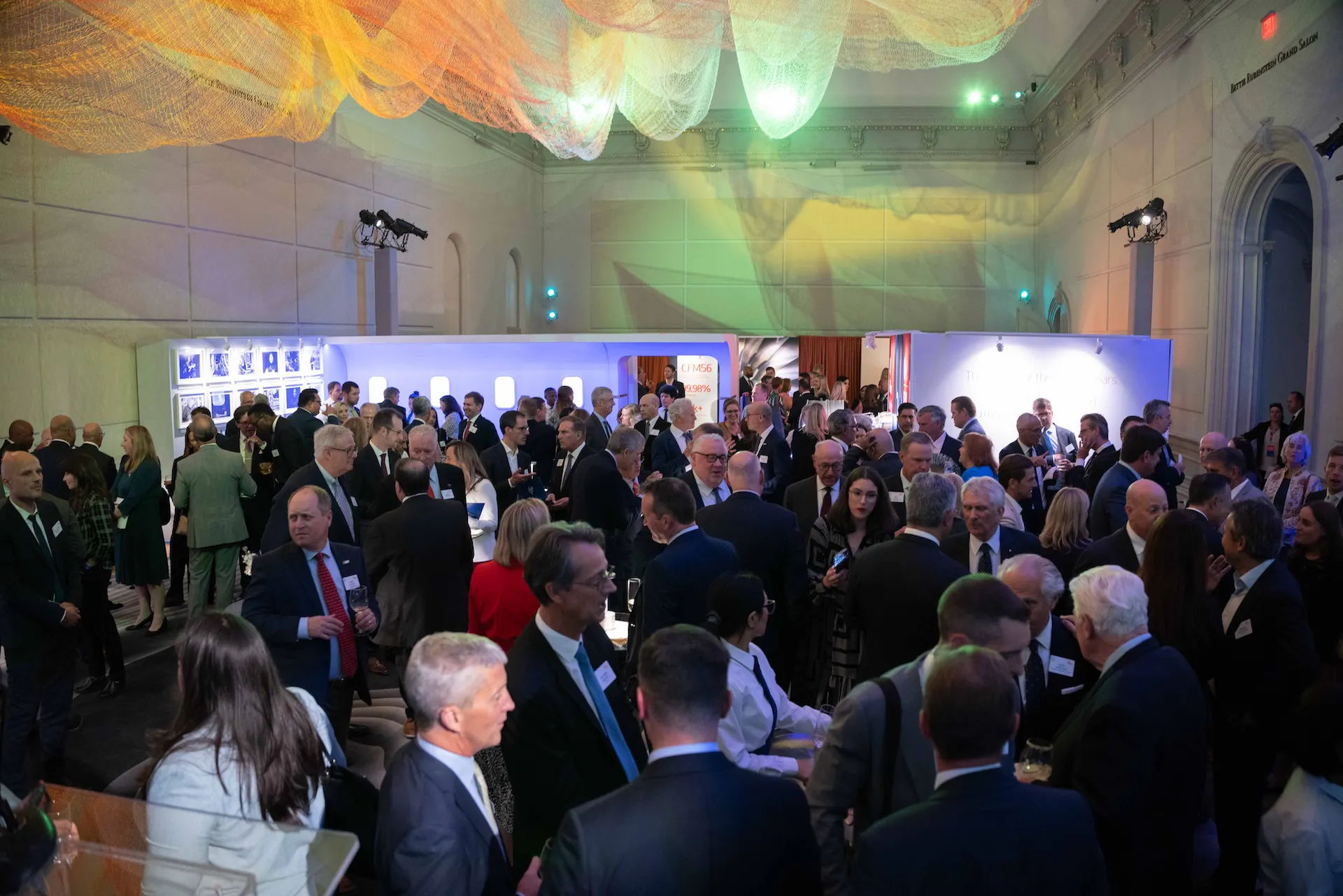
The post-modern airline aesthetic was fully realized within those parameters; the design worked because compliance was in the brief from day one, not added as a constraint at the end.
ADA Compliance in Temporary Event Spaces
ADA compliance for temporary events is a legal requirement, not a design preference. The Americans with Disabilities Act applies to temporary structures and events serving the public, regardless of duration. A pop-up open for a single afternoon has the same accessibility obligations as a permanent installation.
For brand activations, the practical requirements fall across several areas:
Accessible routes
Pathways throughout the activation must be at minimum 36 inches wide and free from obstructions : cords, cables, promotional fixtures, and display stands that narrow the path are all compliance risks. Surfaces must be stable and slip-resistant. Any change in grade requires a compliant ramp with handrails on both sides for rises above 6 inches.
Service counters and interactive stations
If your activation includes any counter where guests interact with staff, receive products, or operate a device, at least one portion of that counter must be no higher than 36 inches from the floor with a minimum 27-inch knee clearance below. This applies to customization stations, check-in desks, product display counters, and gifting stations.
Seating and viewing areas
Any seating must include wheelchair-accessible spaces and companion seats. These must not be placed on raised platforms that are inaccessible, and they cannot be obstructed by production elements or temporary structures.
Signage
Entry, egress, and accessibility features should be clearly marked. Where applicable, the International Symbol of Accessibility should appear at accessible entry points and restrooms.
Restroom facilities
For outdoor activations without access to a permanent facility, portable restrooms must include at least one accessible unit with a 32-inch-wide entrance, five-foot diameter turning radius, and placement on a level, stable surface connected to the main accessible path.
The compliance principle here is straightforward: if your activation is open to the public, all of it is open to all of the public. That framing is more useful in spatial planning than a checklist of measurements, because it prompts the right design question at each decision point.
Insurance Coverage Requirements for Brand Activations
Insurance for brand activations works differently from general business liability, and the gap between what a brand's existing policy covers and what a specific activation requires can be significant. Understanding the coverage structure before contracting a venue or public space is standard professional practice.
- General liability insurance is the baseline requirement for virtually every activation venue, public permit, and brand-side client engagement. Coverage protects against third-party bodily injury and property damage claims arising from the event. Most venues and NYC permit applications require a minimum of $1 million per occurrence, though brand clients in the luxury and enterprise segment frequently require $2 million per occurrence and $3–5 million aggregate.
- Certificates of Insurance (COIs) are the proof document that venues, permit offices, and clients require before load-in. The most common compliance failures: wrong entity name listed as certificate holder, missing additional insured endorsements, and coverage language that doesn't match what the venue contract specifies. Get the exact required wording from the venue contract and provide it verbatim to your insurer.
- Additional insured endorsements extend coverage to a named third party : typically the venue owner, the city municipality (for public permit applications), and the brand client. This is a standard requirement on every NYC agency permit and every venue contract that requires insurance.
- Liquor liability is a separate coverage line required whenever alcohol is served at an event, even when it's complimentary. If your activation includes a bar, a gifting moment with branded spirits, or a hosted cocktail hour, a standalone liquor liability policy or a GL endorsement removing the standard liquor exclusion is required. Most standard event GL policies exclude this by default.
- Workers' compensation covers production staff, crew, and anyone classified as an employee under the event's operational structure. Most production partners carry their own workers' comp; confirm this when collecting sub-vendor COIs.
One practical note on coverage timing: policy coverage should extend to cover load-in, the event itself, and load-out as a single window. Claims arising during setup or teardown are surprisingly common and frequently fall outside a policy that's written only for the event date.
When WONU's production and project management scope covers a full activation, insurance compliance documentation is part of the pre-production deliverable, not a last-minute request from the client.
Security Planning and Crowd Management
Security planning is both a safety function and a brand function. For activations where RSVP numbers are ambitious or the guest profile is high-profile, how a crowd is managed on arrival, inside the space, and at departure is part of the experience. Not separate from it.
SAPO's FAQ is direct on this point: once a permit is issued, hiring private security is the event producer's responsibility. NYPD does not staff permitted events on behalf of organizers. Any security presence coordinated through NYPD happens during the permitting planning phase and is not a substitute for on-site contracted security personnel.

Licensed security
In New York State, security personnel must be licensed through the NYS Division of Licensing Services. Any firm providing security staff for a commercial event must hold a Security Guard Company license; staff must carry a Guard Registration Card. Verify both before contracting.
Capacity monitoring
Designate a specific role for live capacity tracking at entry points, not a secondary function of another staff member. For activations with open RSVPs, the difference between projected attendance and actual arrival can be significant. The Nike x JD Sports Maxxed Out activation in Chicago generated 1,295 RSVPs against a goal of 3x, which required advance crowd flow planning for both the daytime public workshop and the after-hours event to maintain experience quality under real attendance pressure.
Crowd flow design
Entry sequence, queue management, and exit routing are spatial design decisions as much as operational ones. Where is the natural bottleneck in your floor plan? Is the egress path physically separated from the entry path, or are arriving and departing guests competing for the same width? These questions belong in the design phase, not at load-in.
Emergency procedures
Every event should have a written emergency action plan covering shelter-in-place protocols, evacuation routes, staff communication chain, and contact information for local precinct, nearest hospital, and FDNY station. Distributed to every team lead before the event opens.
Building the Compliance Checklist Into Your Production Timeline
The items above don't function as a single submission. They're a sequence of interdependent filings, each with its own agency, lead time, and dependency on what came before. The compliance work has to be mapped to your production schedule the same way fabrication milestones are, and it belongs in the same conversation as how you plan a branded event from start to finish. Most delays aren't caused by applications being denied; they're caused by applications being submitted in the wrong order or at the wrong time.
A condensed timeline framework for NYC street and outdoor activations:
60+ days out: SAPO application for block parties, multi-day events, mobile units. Begin DOB architect/PE engagement if structural elements are involved. Confirm insurance broker and establish coverage parameters with client and venue.
30+ days out: SAPO application for health fairs and standard street events. DOB TUP application filed (requires 15 business days minimum). Insurance COIs ordered with correct additional insured language. FDNY generator and tent compliance documentation initiated.
21+ days out: NYC Parks permit application filed if applicable. FDNY fire safety review initiated for tent structures over 400 square feet. Crowd capacity plan finalized and communicated to security the team.
10 days out: TPA Certificate of Operation request submitted if event exceeds occupancy thresholds. Security staffing confirmed with a licensed firm. ADA compliance walkthrough of floor plan completed.
5 days out: NYPD amplified sound permit filed at local precinct (after Parks permit is issued, if applicable). Emergency action plan distributed to all team leads. All COIs confirmed received by venue, client, and permit offices.
Load-in: Physical permit documents on-site. Generator certification on-site. Site walkthrough with security lead. Egress paths confirmed clear. Accessible routes confirmed clear.
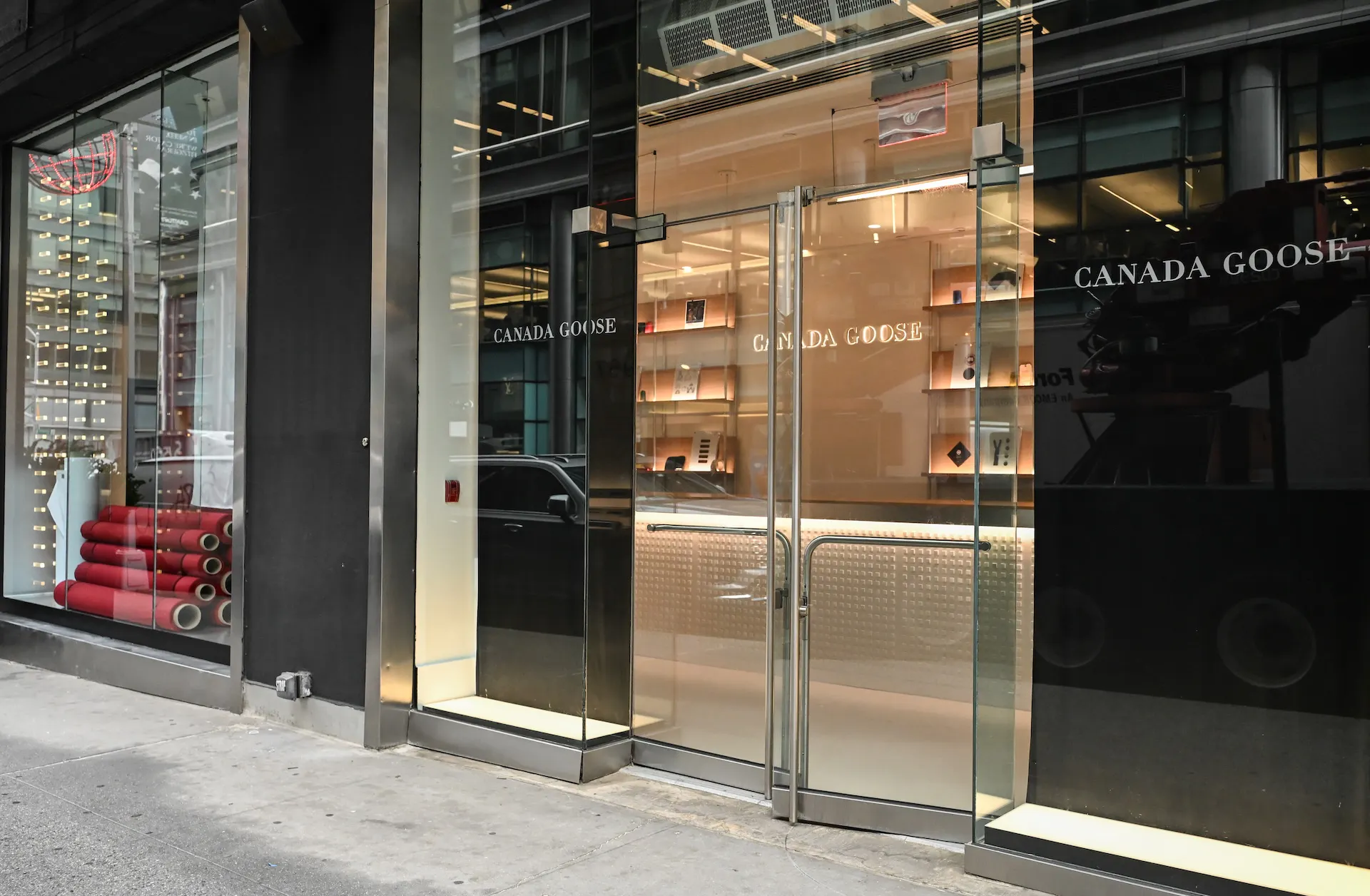
For activations inside private retail environments, like WONU's Canada Goose Born in the North Holiday Pop-Up at Bloomingdale's, which transformed an unused sushi restaurant space into a fully custom brand heritage environment with edge-lit light tower displays, exhibition-style archive walls, and a public customization station, the municipal permit chain is shorter; but DOB occupancy compliance, FDNY fire safety review for any structural or lighting elements, and TPA requirements still apply if the expected attendance crosses the relevant thresholds. The private venue doesn't remove the regulatory layer; it just changes which parts of it apply.
For full-service production and project management that handles permitting as part of the pre-production scope, not as a separate deliverable, the difference is a production calendar that moves. Every filing is tracked, every dependency is logged, and the activation opens on schedule because the compliance work was built into the plan from the beginning.
FAQ: Event Permits and Safety Compliance in NYC
What Compliance Actually Protects
The temptation, when running a compressed production timeline, is to treat compliance as a checklist you manage around rather than through. That calculus doesn't hold for the brands in WONU's portfolio. For Nike, Fendi, GE Aerospace, and Canada Goose, an activation that results in a shut-down, an injury, an accessibility complaint, or an insurance claim isn't just a logistical problem. It's a brand problem. The experience gets remembered by the wrong things.
Compliance work done early costs nothing relative to the alternative. It also produces better activations. The structural and spatial decisions that support compliance are the same ones that support a coherent, safe guest experience. That's not a coincidence. It's the design principle.
If your team is planning an activation in New York City and needs a production partner who builds this into the process from day one, start a conversation with WONU.
Let's build
If you're thinking about how your brand shows up in the world, we'd love to hear from you.