

Experiential Marketing vs Traditional Advertising:
Which Truly Wins Consumer Attention?
Experiential marketing vs traditional advertising: what is really moving the needle in today’s crowded market?
In an age where consumers crave authenticity and connection, the answer may not be what it used to be.
While traditional ads still dominate airwaves and feeds, more brands are turning to immersive, in-person experiences to spark real engagement.
The shift isn’t just trendy. Iit’s strategic.
As audiences grow more ad-resistant, the brands that are creating moments worth remembering are the ones standing out—live experiences build emotional connections and boost brand trust and recall.
Curious how this evolving approach is rewriting the rules of brand loyalty and attention? Let’s see what’s fueling the rise—and rethinking—of marketing as we know it.
What Is Experiential Marketing vs Traditional Advertising?
Before we dive into the data and trends, let’s ground ourselves in what these two strategies actually mean.
Experiential marketing is all about creating moments; think branded pop-ups, immersive events, product try-ons, and activations that invite people to feel something, and not simply see or hear the message. It’s interaction over interruption and connection over conversion (at least at first).
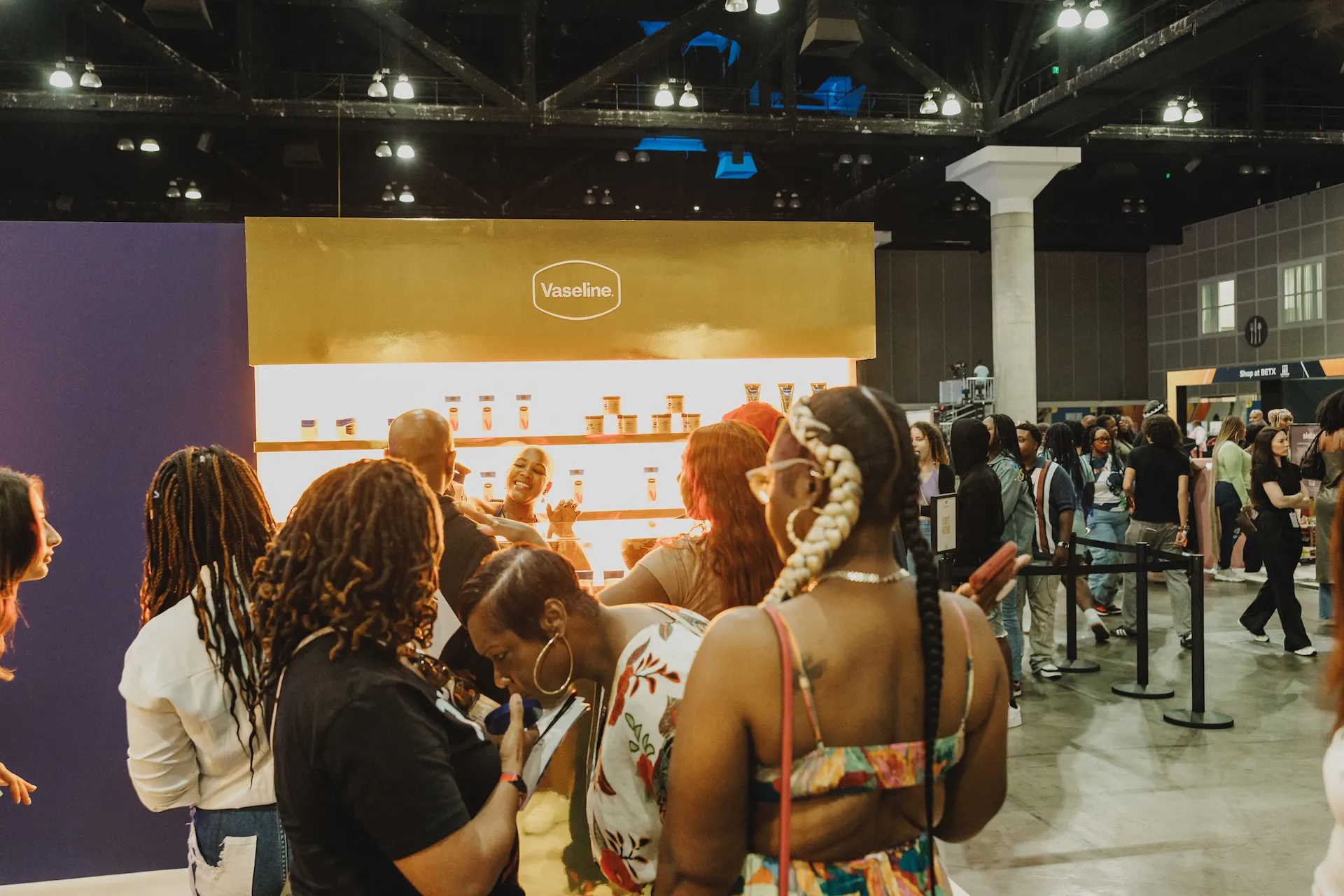
The goal?
Build emotional resonance that lasts well beyond the experience itself.
Traditional advertising, on the other hand, takes a more familiar route. Billboards, TV commercials, print ads, and radio spots; these formats deliver a message to consumers, rather than with them.
It is broad, polished, and often aimed at reaching as many eyes and ears as possible in a short window of time.
Now, both approaches have their place in the marketing landscape. However, the way consumers respond to them, and the results they generate, can be worlds apart.
Emotional Impact & Engagement: Feeling the Brand vs. Seeing the Brand
A well-placed ad may catch your attention, but an immersive brand experience makes you feel something. That’s the critical difference.
Traditional advertising leans on storytelling through sight and sound. Think a campaign slogan, a polished commercial, a striking billboard.
It’s a one-way message, designed to interrupt and inform.
Experiential marketing, by contrast, invites people into the story. It’s in the electric atmosphere of a live activation, the texture of a curated space, the spark of an unexpected moment shared with others. These experiences create emotional connections, real ones.
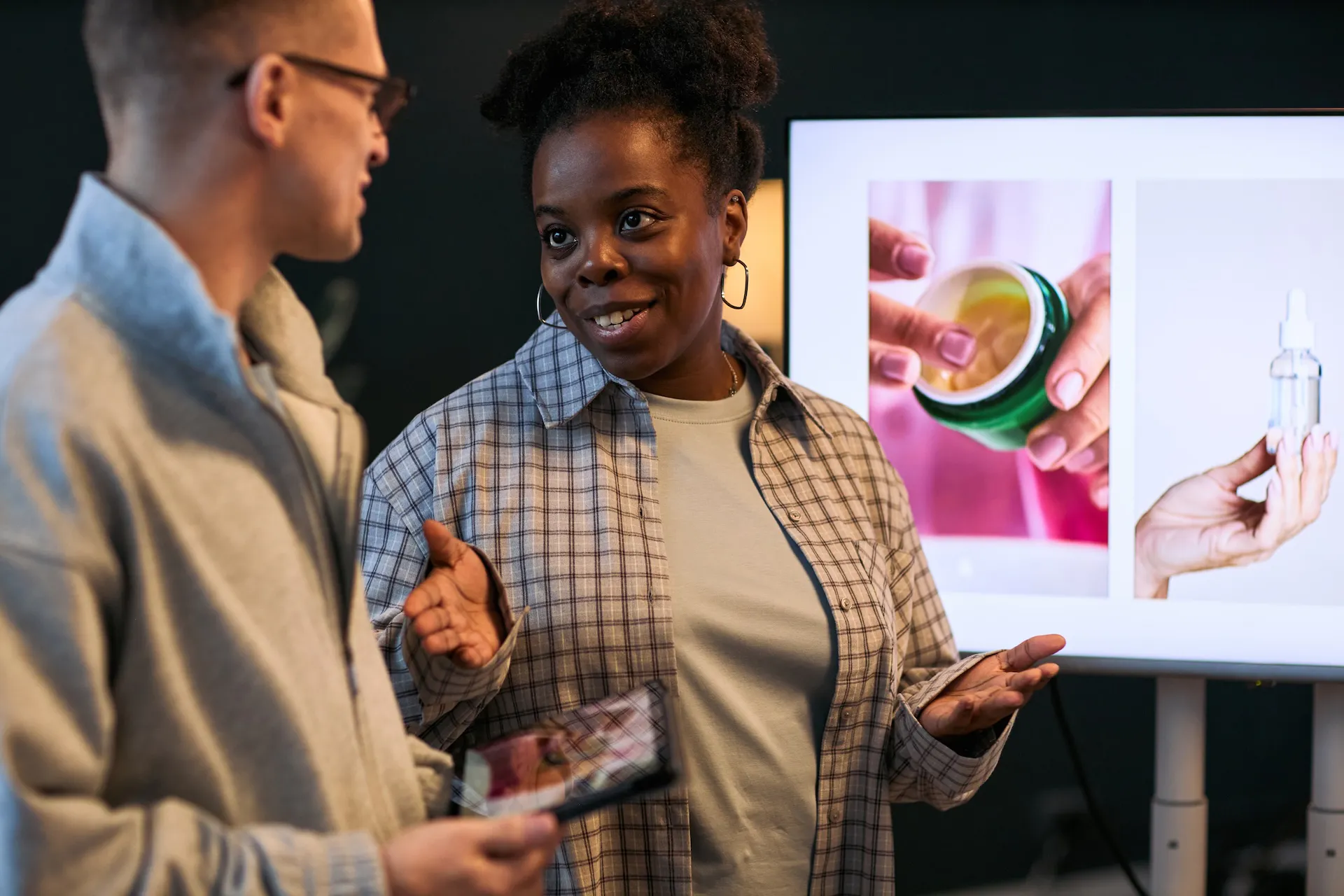
In fact, 87% of consumers say that branded events are more memorable than ads. You don’t simply see the brand; you feel it, and that sensation lingers. That’s exactly how consumer loyalty is born.
Case in point:
91% leave with positive feelings toward the brand.
That kind of resonance drives engagement beyond the event itself. People do more than recall the brand; they relive it, talk about it, and share it.
And where traditional advertising fades into the background, experiential marketing lives on in their hearts, minds, and Instagram stories.
That’s deeper value; measurable, memorable, unforgettable.
Measurable Impact & Effectiveness: What Marketers Are Really Choosing
It’s not only consumers who feel the difference. Marketers are backing experiential strategies with serious conviction.
In New York, a hub for bold brand thinking, 52% of marketers say experiential campaigns deliver more value than any other channel, while 77% prefer them over digital ads. Why?
Because the results go beyond impressions; they create lasting influence.
Take campaign success; 38% of marketers rank experiential as their most effective tactic. And when 85% of consumers are more likely to purchase after attending a branded event, that’s more than a vibe. That’s ROI.
Clicks don’t build community. Experiences do.
Traditional ads might drive clicks and conversions, but they rarely spark that 80% recall rate or the loyalty uptick that 40% of experiential participants mention.
Simply put, experiential activations drive connections. Case in point:
Nearly 80% of marketers agree that live brand experiences are critical for long-term success.
Even hybrid experiences (as in, blending physical and digital) are proving powerful. They amplify reach, spark real-time engagement, and generate measurable revenue lifts. For luxury brands especially, these are more than stats; they’re the blueprint for modern community-building.
WONU helps brands go from impressions to impact and turn insight into immersive strategy; measurable, meaningful, and unforgettable.
From Presence to Participation: The Power of Social Amplification
Step onto the floor of a well-curated NYC pop-up and you’ll feel it immediately: the undeniable electricity, curiosity, and connection.
This is where experiential marketing thrives and where participation turns into amplification.
98% of attendees take out their phones to capture the moment, and 72% share that content online. That’s more than engagement. It’s a ripple effect of real-time, user-generated storytelling that reaches far beyond the room.
That’s social amplification at work.

Unlike traditional ads, which speak at people, live brand experiences inspire those people to speak for the brand. And since all these moments are rooted in face-to-face connection, the trust is higher, the message more authentic, and the impact longer-lasting.
The sensory buzz, the human touch; it persuades, inspires, and sticks.
It’s not about selfies for the algorithm. It’s about substance. Today’s audiences want more than passive consumption; they crave connection, conversation, even friction; the kind of vibrant, human interactions that fuel community.
That’s where experiential wins, every time.
We design moments that move. Work with WONU to create experiences worth sharing and stories worth retelling.
Budget Allocation & Industry Growth: Where the Money’s Actually Going
Even as NYC fills with retail pop-ups and immersive brand moments, the real shift is happening behind the scenes, on the spreadsheets. Marketing budgets are reflecting a clear trend:
84% of companies have increased their experiential spend and are dedicating between 10% and 30% of their total budgets to activations, especially in industries like beauty and skincare.
That said, traditional advertising still commands a larger share overall, accounting for nearly two-thirds of U.S. marketing spend. Why?
Legacy systems, broad reach, and sheer habit.
Both sectors grapple with ROI pressure, but the momentum is changing.
Experiential marketing is growing at over 10% annually, with post-pandemic investments now $6.4 billion higher than pre-2020 levels.
Here’s how experiential and traditional budgets stack up:
Marketing Approach | Budget Allocation | Growth Rate |
Traditional Advertising | 9.5% of revenue | Digital growing, offline declining |
Experiential Marketing | 10–30% of total spend | 10%+ annual growth |
The takeaway? Traditional may still dominate in size, but experiential is leading in momentum, especially for brands that prioritize emotional connection, community, and cultural impact.
Measuring What Matters: KPIs Across Both Worlds
Whether you're hosting a pop-up in SoHo or running a print campaign in Vogue, one question lingers:
Did it work?
Success looks different depending on your strategy, and so do the metrics that matter.
Traditional campaigns, including print, TV, billboards, and static digital ads, lean on reach-based metrics. You're buying visibility, and your numbers reflect that.
- Impressions & Reach: How many people saw it?
- CPM (Cost per Thousand Impressions): How efficient was the spend?
- Click-Through Rates (CTR): Did it drive immediate action?
- Conversions: Did it convert viewers into customers?
It’s visibility at scale. But emotional resonance? That’s harder to track.
Experiential campaigns move differently. With immersive brand experiences, you're not simply measuring attention; you're tracking interaction.

The KPIs reflect emotional resonance and deeper engagement.
- Foot Traffic & Dwell Time: Who came, and how long did they stay?
- On-Site Engagement: Were people interacting, and not merely observing?
- Social Sharing & UGC: Are attendees creating content about the experience?
- Brand Sentiment & Recall: Do people remember and feel good about you after the event?
- Sales Lift & Lead Quality: Did it translate into lasting action?
What you track reveals what you value. Traditional metrics show breadth, while experiential metrics show depth: how deeply your brand is felt, remembered, and talked about.
If your brand is after reach, repetition, and awareness, traditional advertising might fit the brief. But if you want resonance, advocacy, and real-time feedback, experiential marketing offers the kind of depth those numbers can't always capture.
We don’t simply track numbers. We track resonance. Let WONU show you how experiential can deliver both data and depth.
What’s Next: Tech, Storytelling, and the Evolution of Experience
You can walk down Greene Street on a Thursday night, and you’ll feel it; the line between art, retail, and branded storytelling is blurring fast.
You’re no longer simply shopping. You’re stepping into a fully immersive world.
Experiential marketing is evolving in real time, and technologies like AR, VR, and AI are all reshaping how brands connect with people.
Think smart mirrors that reveal hidden stories, VR adventures that place you inside the North Face brand, or gamified product try-ons that reward curiosity. It’s no longer a moment; it’s a journey.
Urgency, surprise, and personal storytelling converge, driving crowds to capture every hyper-personalized moment for social feeds and unforgettable brand experiences.

These innovations don’t simply engage; they scale. With 96% of marketers saying video improves product understanding, experiences are being designed with short-form, high-impact content in mind. The result? Interactive campaigns that live both IRL and across digital channels.
Through creative pop-up experiences, urgency and surprise blend with storytelling, pulling in crowds ready to document every detail for social media. Virtual and Augmented Reality (VR and AR) will continue to add to these immersive brand interactions, pushing the boundaries of what consumers expect on both physical and digital fronts.
Add in hyper-personalization trends, driven by live feedback and AI, and suddenly, all those interactions feel custom, not canned. Surprise, urgency, and emotional resonance are no longer optional; they are strategic.
The future of marketing? It’s communal, tactile, tech-enhanced, and built for sharing.
This is where experiential leaves traditional advertising in the dust.
It’s also where WONU thrives. Creative, methodical, and culture-first by design.
Case Studies: How Experiential and Traditional Campaigns Stack Up
What happens when you move beyond billboards and banner ads and into bold and immersive territory?
The following case studies show how experiential marketing turns everyday branding into unforgettable moments, while traditional campaigns often struggle to match the same level of cultural resonance.
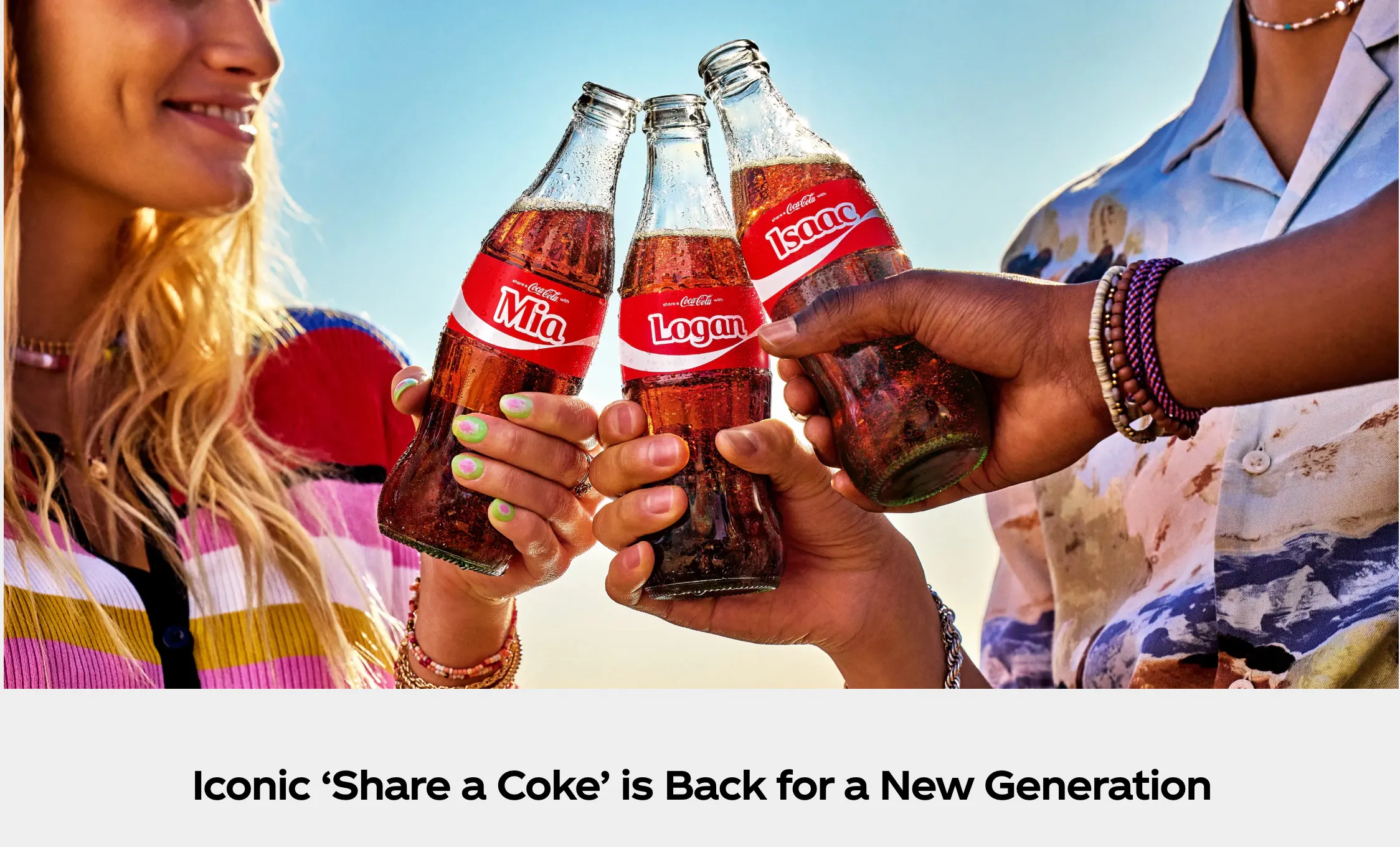
Coca-Cola swapped its logo for real people’s names and the world responded. This was more than a label change; it was a personal invitation to connect. People scoured shelves looking for their own or their best friend’s names, then shared the moment online.
It blended personalization, real-world interaction, and social virality; a trifecta of experiential value. The result? A 2% increase in U.S. sales, a flood of user-generated content, and a 6.8% increase in young adult consumption.
Red Bull didn’t only advertise energy; it launched it into the stratosphere. With the world watching, Felix Baumgartner skydived from the edge of space, breaking multiple records and commanding global attention.
It wasn’t a product pitch. It was a moment of cultural history. Experiential at its most extreme. The result? Over 8 million YouTube live viewers, 1 billion+ social impressions, and a massive brand lift.
Coca-Cola’s Share a Coke and Red Bull’s Stratos campaigns may not be recent, but they’re still landmark moments in marketing history. They set the benchmark for what experiential marketing could be: personal, powerful, and culturally sticky.
Now compare those with a traditional print or banner ad. Sure, it might get seen. It might even convert. But does anyone remember where they saw it? Or how it made them feel? That’s the gap.
Traditional ads are still valuable, but far less sticky.
Experiential campaigns don’t merely aim to sell a product; they craft a story people want to be part of. And in today’s attention economy, that kind of connection is priceless.
Leave an Impression That Lasts
In a world saturated with noise, impact comes from experience, not interruption.
The brands that are winning today aren’t shouting louder; they are showing up smarter, crafting moments that move people, spark conversation, and invite community.
In that sense, the choice between traditional advertising and experiential marketing will define your brand’s impact. Don’t settle for being seen; aim to be remembered.
At WONU, we design those moments with care, strategy, and cultural precision. And when your audience doesn’t only see your brand but feels it, everything changes.
Looking to shift from passive impressions to a real, lasting connection? Let’s talk.
Let's build
If you're thinking about how your brand shows up in the world, we'd love to hear from you.