
Event Production Technology Is Rewriting What Live Experiences Can Do
There's a specific moment during tech rehearsal. Maybe twenty minutes before doors open, the room still empty. A 40-foot LED wall resolves from gray static to full-motion color and the entire space shifts around it.
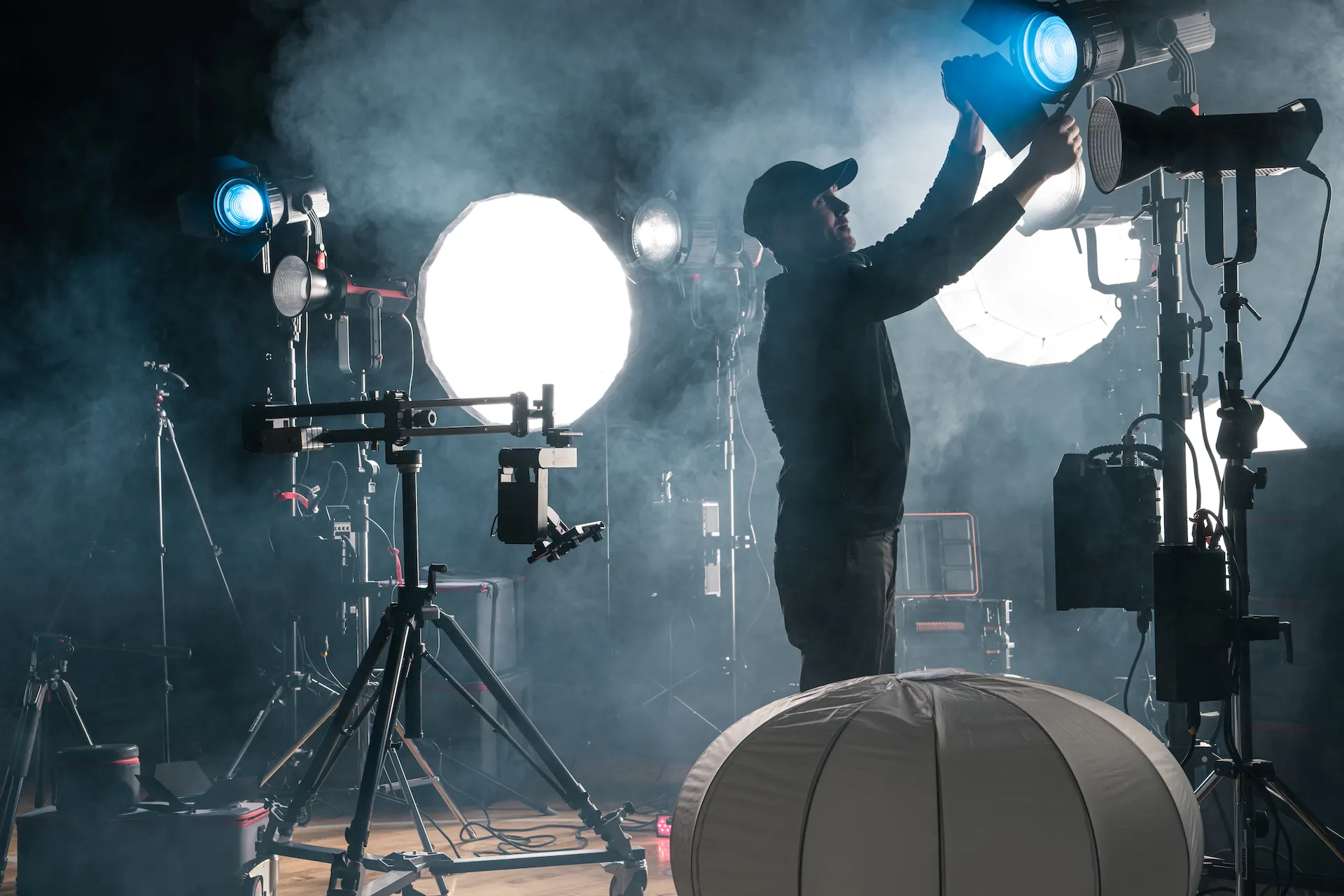
The ceiling reads lower. The corners disappear. What was a neutral ballroom or a blank warehouse bay is suddenly a place with a defined atmosphere. That transformation is what event production technology is actually selling.
The standard for live brand experiences has moved considerably in the past few years. Audiences now carry broadcast-quality cameras in their pockets and scroll past content produced by studios with eight-figure budgets.
The bar for what reads as remarkable, visually, spatially, experientially, is higher than it's ever been. Agencies and brand teams keeping pace with the production technology available to them are building events that succeed in that environment. The ones that aren't are producing events that feel dated before the load-in is finished.
Why the Production Floor Looks Different Than It Did Five Years Ago
Five years ago, a well-produced brand activation meant custom fabrication, a sound system that covered the room cleanly, and a printed or vinyl backdrop that read well on camera. That was enough.
It isn't anymore, and the shift is less about aesthetics than it is about function. Event Marketer's ongoing research on experiential trends consistently points to the same pressure: the live event has to justify its budget against digital channels that can demonstrate attribution, reach, and ROI in real time. That's changed what brands are willing to invest in, and what they're expecting their production partners to deliver.
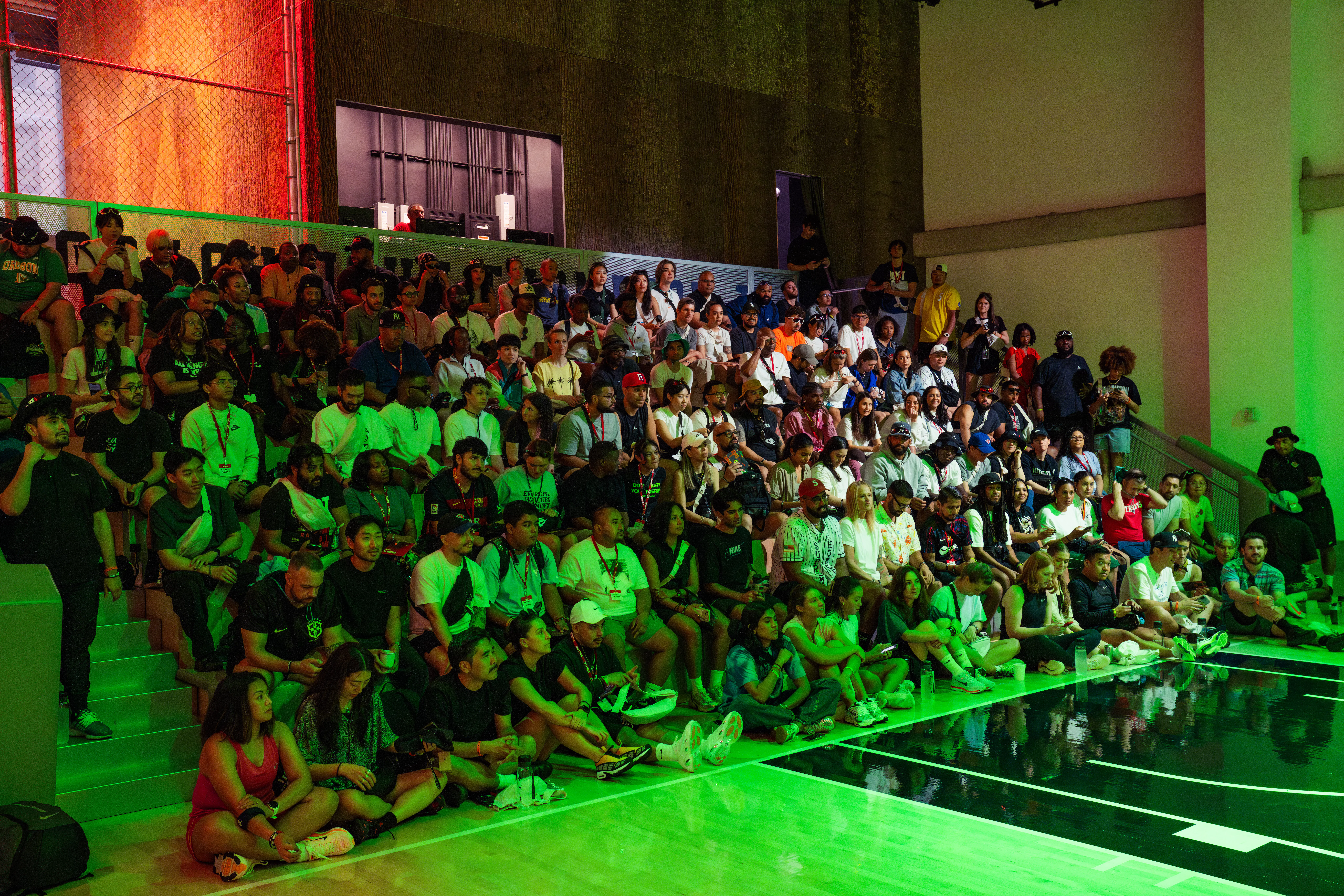
The other driver is documentation. An activation photographed well used to be a bonus. Now it's part of the brief. Events are designed for the room and for the feed simultaneously, and the production technology choices made at the planning stage determine whether the final content looks like a brand investment or a brand photo album.
The hardware has also become more accessible. LED panels that cost six figures to rent a decade ago have come down substantially. Drone show operators have proliferated. Projection mapping tools have matured to the point where mid-sized agencies can incorporate them without the production complexity that once made them prohibitive. The floor has shifted. What was experimental in 2019 is a plausible option in 2026.
LED Walls Have Moved from Background to Architecture
The first generation of LED walls at brand events were background technology. A bright, high-resolution alternative to a printed backdrop. They were placed where a printed flat would have gone and used in roughly the same way.
That's a narrow reading of what the technology can do. Modular LED panels are spatial infrastructure. They define walls, create thresholds, break a large room into distinct zones, and change in real time. A product launch can transition from a pre-reveal atmosphere to a full brand moment without anyone touching a piece of fabric or set dressing. The space itself does the work.
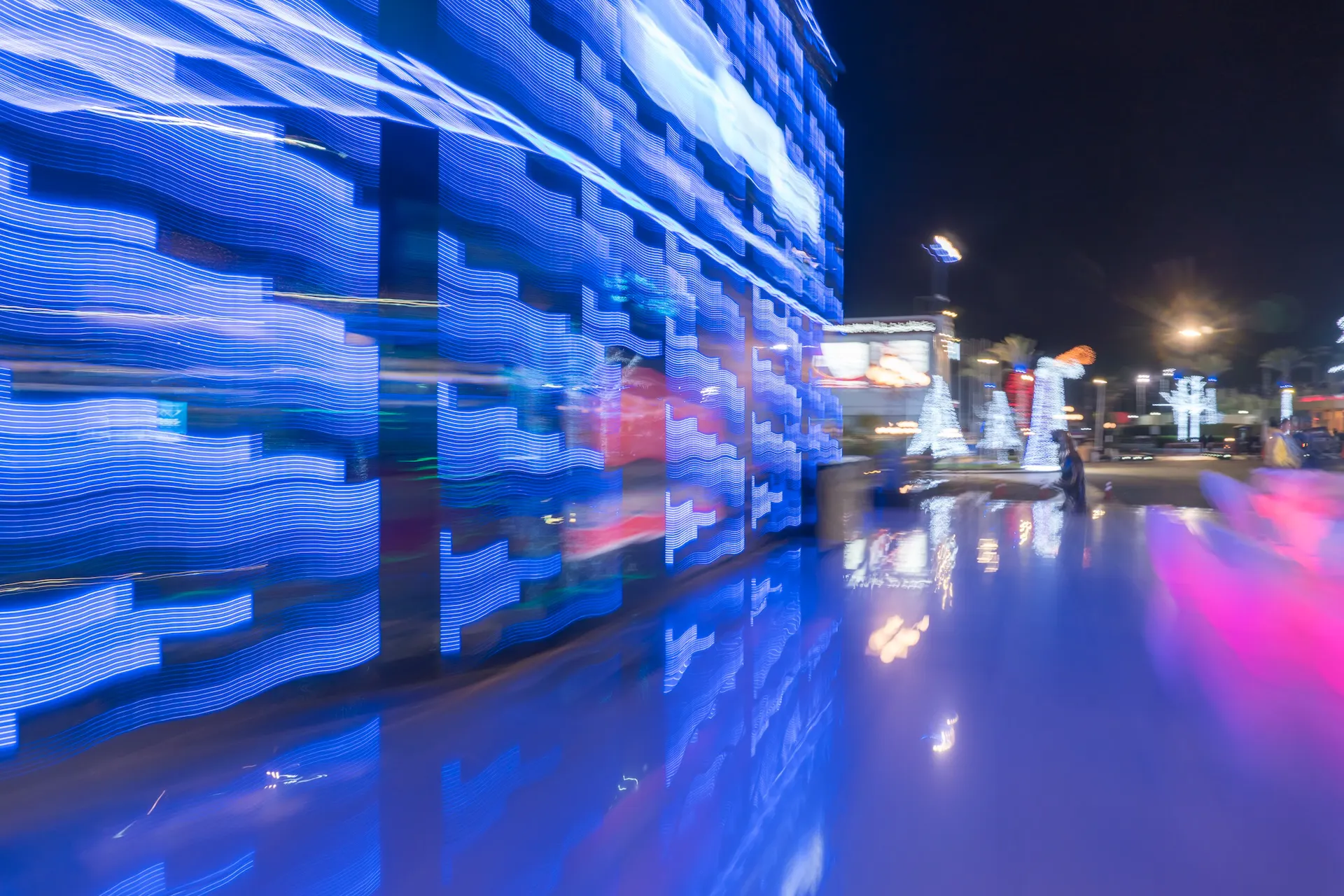
The choice that matters most is pixel pitch: the distance between individual LEDs, measured in millimeters. A P2.9 pitch (2.9mm between pixels) reads cleanly from a few meters; a P4 or P6 pitch is fine for larger spaces where audiences aren't standing close. Brands choosing LED walls for intimate activations, like a showroom product reveal or a private client dinner, often underspec the pitch and end up with visible pixelation at conversation distance. It's a detail that reads cheap.
What's more interesting is how LED configurations are now being used to shape event geometry. Curved panels wrap around columns or create immersive curved corridors. Transparent LED panels, a technology that's matured significantly in the past two years, can overlay a physical product display with dynamic content without fully obstructing the sightline. Floors, ceilings, angled overhead canopies: the form factor has expanded well past the vertical flat.
The production implication is that LED wall specifications now belong in the spatial design conversation, not just the AV spec sheet. The decisions made at the rendering stage, about scale, configuration, and content framework, determine whether the technology disappears into the experience or draws attention to itself.
What Projection Mapping Actually Does to a Space
Projection mapping and LED walls are often treated as interchangeable options in event production conversations. They aren't. The two technologies operate on different principles and solve different problems.
Projection mapping is the technique of calibrating projected light to the precise geometry of a three-dimensional surface: a building exterior, a sculpted product form, an irregular architectural element, a piece of branded set dressing. The software aligns the projected content to the surface contours so the imagery appears to follow the object's shape rather than wash across it indiscriminately. When it works, surfaces appear to breathe, peel, crack, or transform. When it doesn't, you see the seams.
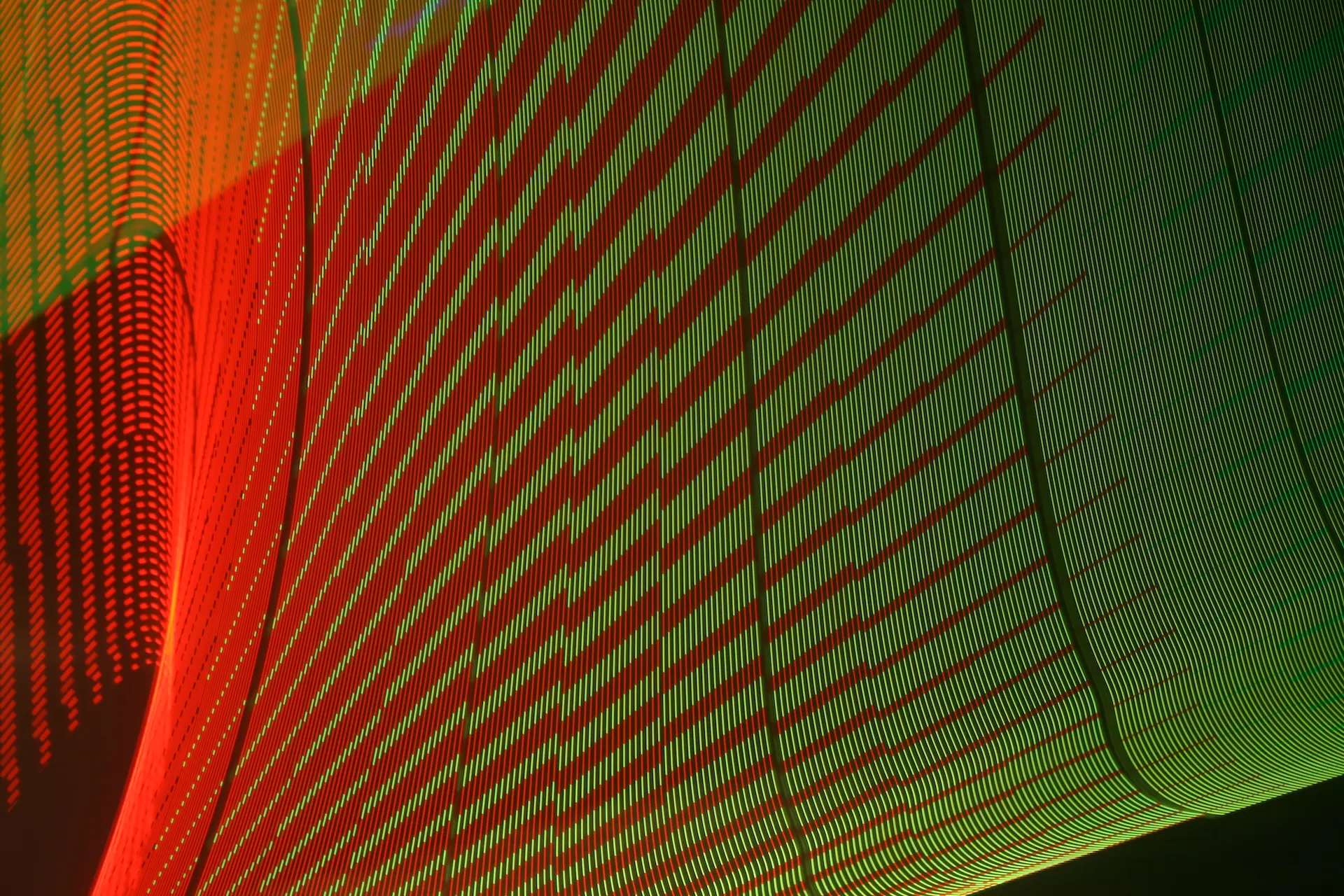
LED delivers luminance. Projection mapping delivers transformation. LED is more legible in ambient light; projection mapping requires controlled darkness to read at full impact. These are constraints, not failures. They're design parameters that shape where and when each technology belongs.
The coordination requirement is significant. Projection mapping is not a technology you add to a set after the spatial design is finalized. The surfaces being mapped have to be factored into the production plan from the beginning: their geometry, their material finish (matte surfaces map better than glossy ones), their structural stability, and their relationship to the projector throw distance and placement. Late-stage additions produce late-stage compromises.



The applications that work best are product launches where a physical object becomes the projection surface, architectural activations where the exterior of a venue becomes the canvas, and cultural events where the atmosphere needs to shift dramatically across the program arc. For the Canada Goose pop-up WONU produced at Bloomingdale's, the spatial design of the environment was built around surface quality and material integrity. Custom edge-lit light tower window displays, exhibition-style multimedia walls, and precision flooring treatments created a fabrication baseline where every surface was intentional. That's the kind of environment where projection-quality moments become possible.
Our creative direction and spatial design work starts from this premise: the technology decision and the spatial decision belong in the same conversation, not in separate workstreams.
Are Holographic Displays Ready for Live Brand Events?
The honest answer is: it depends on what you mean by holographic.
True volumetric holography, light that appears to occupy three-dimensional space without any physical substrate, remains largely experimental at event scale. What's commercially available and increasingly common at brand events is a category of pepper's ghost illusions, transparent LED films, and spinning LED persistence-of-vision displays that create the impression of a floating three-dimensional image. The effect, in the right conditions, is striking. The category's marketing tends to run ahead of the technology's capabilities.
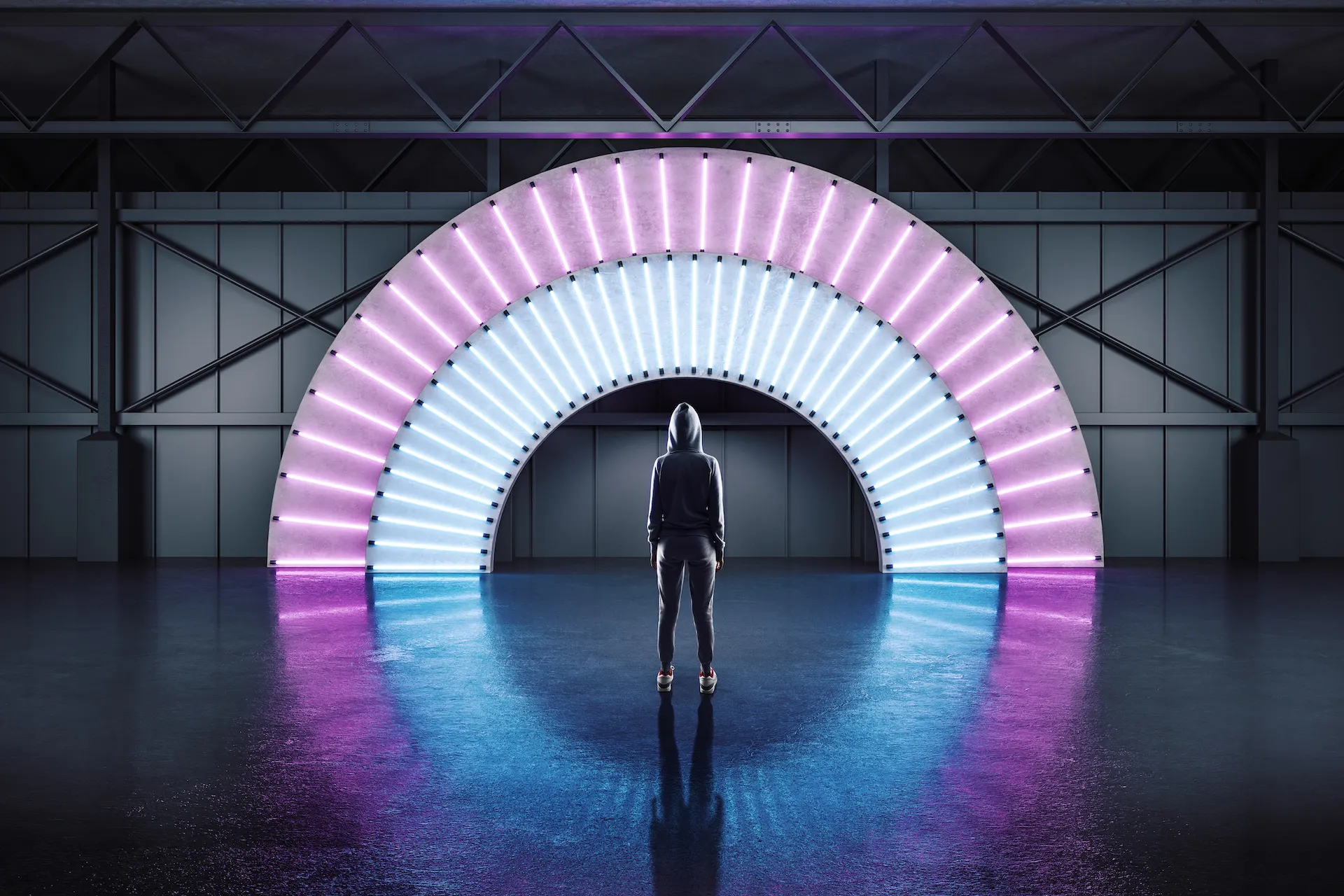
Pepper's ghost is the oldest of these techniques: a 19th-century theatrical illusion that uses angled transparent screens to project a reflected image into physical space. Coachella's well-known 2012 Tupac "hologram" was a large-scale pepper's ghost rig. The principle hasn't changed; the production hardware has become more refined and more accessible.
Transparent LED films stretched across framed panels produce a similar layering effect and can be integrated into modular displays without the room-darkening requirement that pepper's ghost rigs typically demand. They're being used for product reveals, keynote visual moments, and high-end retail window displays. The limitations are viewing angle sensitivity and the requirement for controlled ambient light.
Spinning persistence-of-vision displays (sometimes marketed as "3D holograms") work well for small-to-medium product objects in relatively intimate settings. They don't scale to fill a room. They're conversation pieces at a trade presence or a product launch station, not anchors for a 500-person experience.
For brands asking whether holographic technology belongs in their 2026 activation plan: the answer is yes, conditionally. Define the moment it's serving, whether that's a product reveal, a signature visual element, or an intimate discovery station, and source the right technology for that specific application. The instinct to drop a hologram into a program because it sounds impressive typically produces an impressive-sounding line item and a mediocre visual experience.
Drone Shows as Choreographed Brand Narrative
A drone show is not a fireworks replacement. It's a scripted medium.
Indoor and outdoor drone light shows are programmed at the level of individual frame content: the formations the drones hold, the speed of transitions, the color shifts within the array. When the choreography is working with a brand's visual language, a drone show tells a story in the sky that no other production medium can match. When it's a generic shape sequence set to licensed music, it's an expensive spectacle that reads immediately as a spectacle.
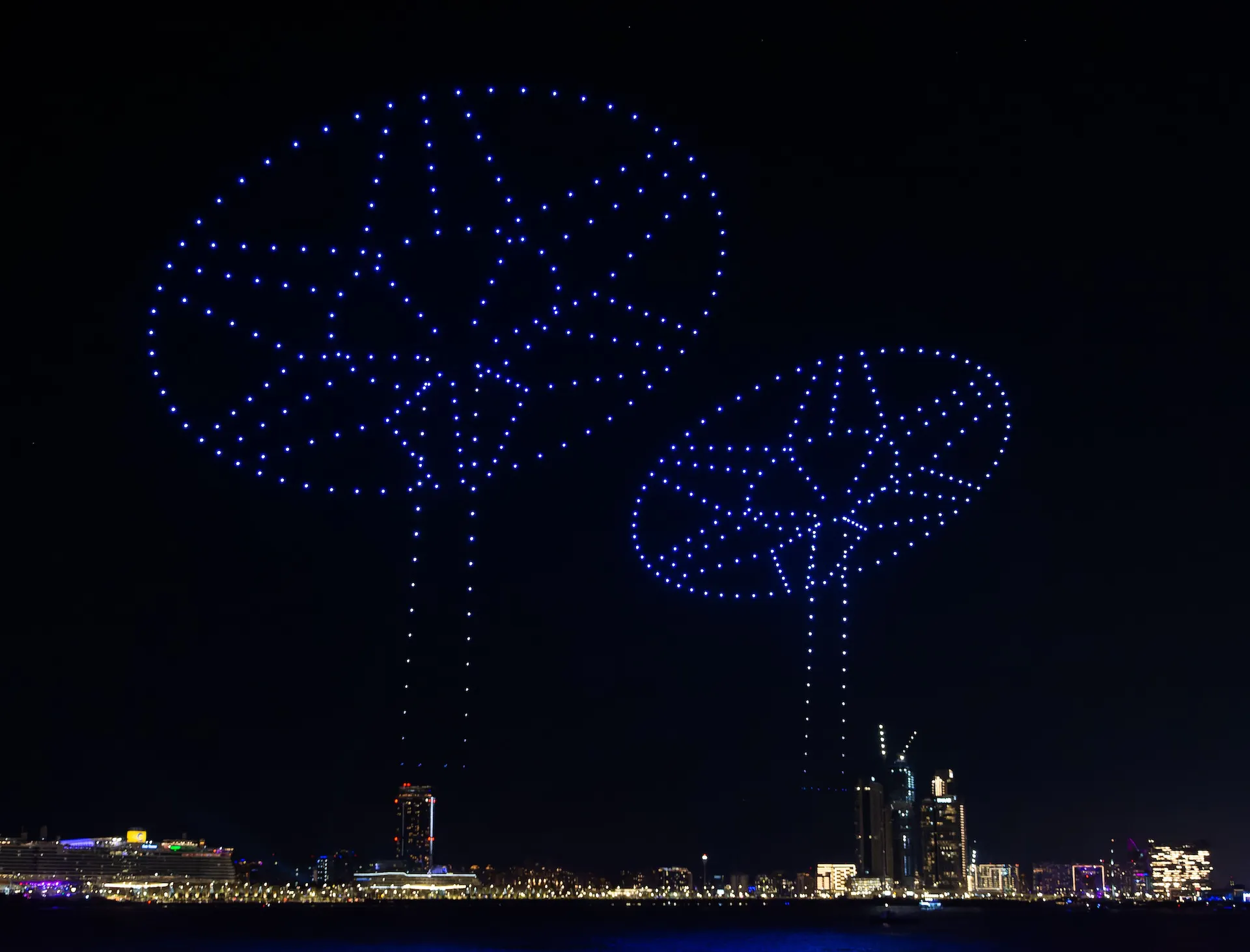
The production requirements are consequential. Outdoor drone shows in the U.S. require FAA Part 107 waivers for operations beyond standard line-of-sight and nighttime flight, with lead times that can extend to several weeks. Minimum viable fleet sizes for legible visual content, shapes, text, narrative sequences, typically start at 100 to 150 drones. The large-scale shows that generate significant social coverage often run 300 to 500 or more. Indoor shows have their own constraint set: ceiling height, structural clearance, GPS signal (indoor shows use alternative positioning systems), and the fire safety protocols of the specific venue.
The brands using drone shows most effectively aren't treating them as standalone spectacles. They're treating them as chapters in a larger experience arc. A product launch that builds through the evening toward a drone reveal, where the drone sequence resolves a visual story introduced at the event entrance, lands differently than a show that starts and finishes without narrative connection to the event it's part of. The technology earns its cost when it's doing narrative work.
VR Visualization Is Changing How Events Get Designed
The most significant shift in event production technology over the past three years may not be what happens on show day. It's what happens three weeks before load-in.
VR walkthroughs of event environments have become a standard part of the design and client approval process for production companies that invest in them. A spatial design that previously existed as a rendered flat image or a 3D model viewable on a laptop screen can now be walked through, turned in, and experienced at scale before a single structure is fabricated or a deposit is placed on a venue hold.
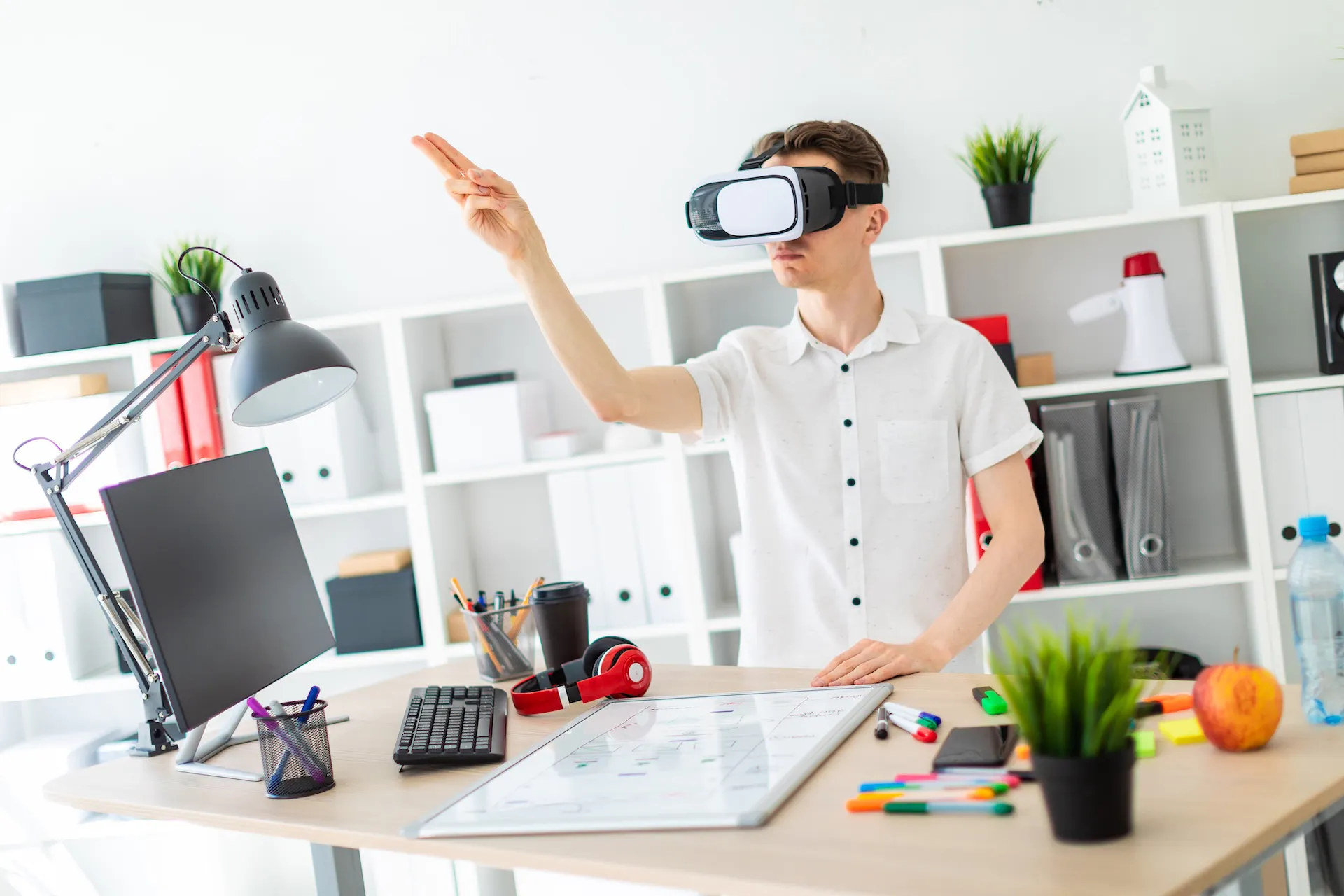
The practical implications are significant. Clients catch problems they wouldn't have noticed in a 2D rendering: a sightline to the stage blocked by a suspended installation element, a brand moment that reads dramatically from one angle and disappears entirely from another, a circulation path that creates a bottleneck during peak attendance. Changes made in a VR walkthrough cost a designer's time. Changes made after fabrication cost a production budget.
Tools like Unreal Engine, originally a game development platform, have become standard in architectural and event visualization. Purpose-built event design software like Vectorworks Spotlight handles CAD-accurate spatial planning, lighting design, and rigging documentation in an integrated environment. Matterport captures and renders existing venues in photorealistic 3D that teams can navigate remotely before a site visit.
The client-facing value is confidence. The production-facing value is fewer mid-build surprises. Both matter when you're operating on a four-week production window.
Our production and project management process integrates spatial visualization as a standard checkpoint, not an optional service tier. The decisions made at the design stage are significantly cheaper to get right than the ones made at the venue.
Production Management Tech That Keeps Complex Events on Track
The hardware and spectacle technologies get the attention. The production management stack is what determines whether they're deployed on time, on budget, and according to spec.
Complex brand events, multi-zone activations, multi-city rollouts, programs with significant fabrication and technology integration, involve production timelines that can run to hundreds of interdependent line items. A LED wall panel shipment delayed two days cascades into rigging schedule changes, content testing delays, and crew overtime. The brands running these programs at scale are the ones with production management infrastructure that can absorb the inevitable variance without collapsing the timeline.

Event-specific project management platforms, including tools like Asana configured for production workflows or specialized platforms like Planning Pod, give production leads real-time visibility into task completion across vendors, fabricators, AV companies, and venue contacts simultaneously. Shared document environments (Google Workspace, Notion production wikis) have largely replaced the email chain as the source of record for spec sheets, run-of-show documents, and vendor confirmations.
For fabrication-heavy activations, 3D CAD documentation has become a quality control mechanism, not just a design deliverable. When a fabrication partner in one city is building structural elements for an event in another, CAD accuracy is the shared language that prevents a 4-inch dimension discrepancy from becoming a show-floor problem.
The production layer isn't glamorous. It's also the reason a 30-person load-in crew can execute a build in 16 hours that a less coordinated production would take 30 to finish. The Nike x JD Sports Maxxed Out activation WONU produced in Chicago is a good reference point: a full retail takeover, two distinct program acts, screen takeovers, mobile billboard, and custom product displays, all delivered on a four-week timeline from brief to show day. That kind of execution discipline is built into how we approach full-service event production from the first planning call.
Frequently Asked Questions
The Standard Is Set by What Audiences Have Already Seen
The events that hold attention in 2026 are competing against a reference set that includes entertainment-grade productions, cultural festivals with eight-figure budgets, and brand activations from global companies with dedicated experiential teams. That's not an argument for chasing technology for its own sake.
It's an argument for understanding what the available tools can do and building a production strategy around the moments that matter for a specific brand, audience, and objective. LED panels as architecture. Projection mapping as transformation. VR walkthroughs as the design quality control that prevents costly surprises. Drone shows as scripted narrative when the program arc calls for one. Production management infrastructure as the operational foundation that makes all of it possible.
Getting that combination right at the speed most brand activations demand requires a production partner with both creative fluency and execution discipline: a team that's made the technology decisions, run the vendor relationships, and delivered under real production pressure.
If your brand is ready to build experiences that operate at that level, start a conversation with our team.
Let's build
If you're thinking about how your brand shows up in the world, we'd love to hear from you.