

Experiential Marketing vs. Event Marketing:
What’s the Difference?
Experiential marketing vs. event marketing: what’s the real difference? These two terms are often used interchangeably, but they deliver very different results. One captures attention; the other creates emotional connection.
If you’ve ever wondered which approach would leave a stronger imprint and when to use each, you’re not alone. As audiences get more selective and less responsive to traditional marketing tactics, brands require more than visibility. They need presence with purpose.
That’s where this comparison comes in.
Keep reading to explore how these two strategies stack up in today’s experience economy and which one aligns best with where your brand is going.
What Is Event Marketing?
Event marketing is a traditional, structured strategy where a brand promotes itself through planned events, both in-person and virtual. These range from product launches, conferences, and trade shows to branded webinars and sponsored festivals.
The goal of event marketing is to drive awareness, encourage sign-ups, and initiate conversations with a targeted audience.
Unlike experiential marketing, it tends to follow a clear schedule and structured format.
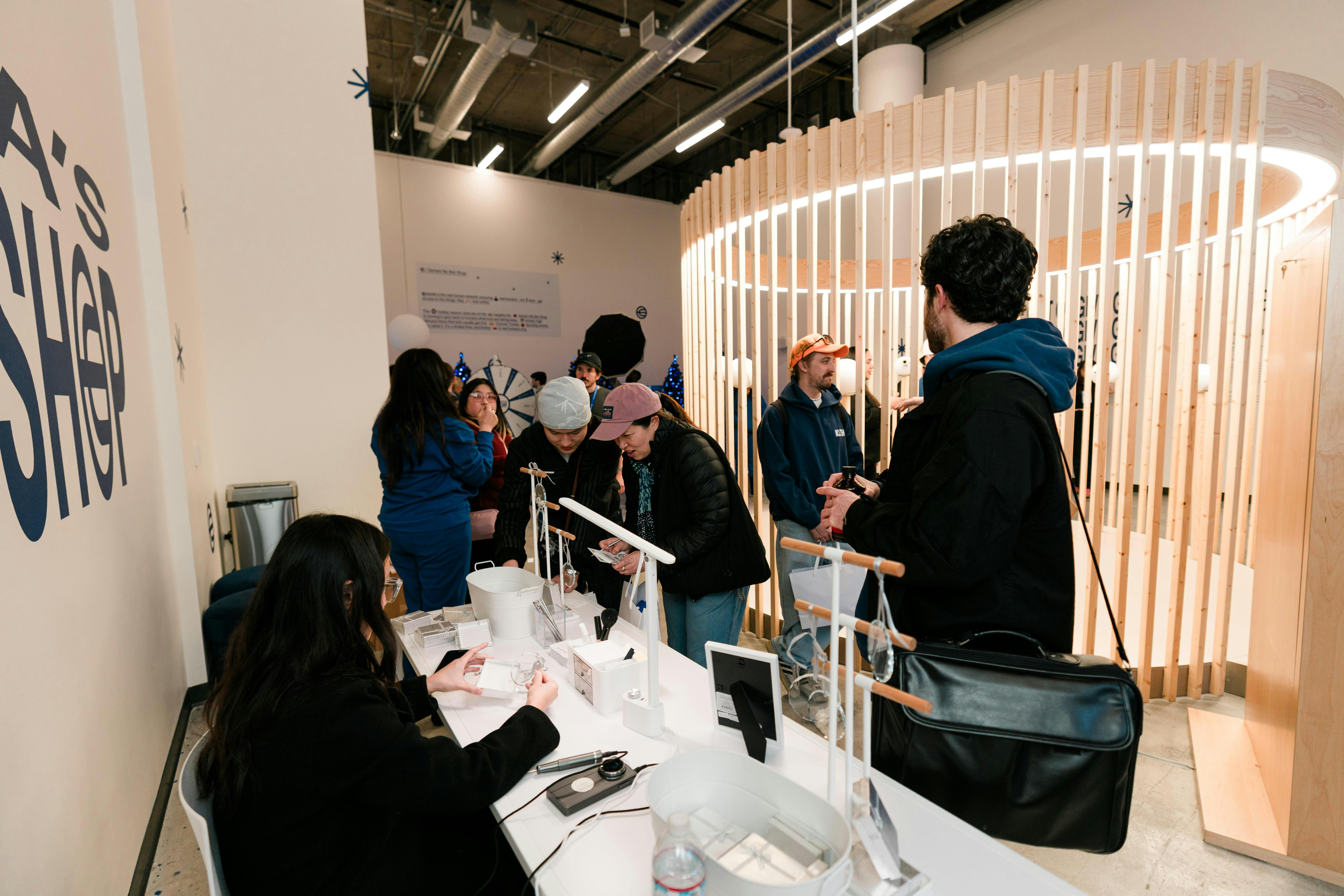
Brands often rely on presentations, displays, booths, and speeches to communicate value, and attendees participate passively; they’ll watch, listen, network, and move on. It’s a one-to-many model that prioritizes visibility and lead capture over emotional engagement.
That’s not to say it isn’t effective.
Event marketing works best when the goal is to reach a specific group with clear messaging, especially in B2B or industry-focused contexts, like Salesforce’s Dreamforce conference. Such events can drive serious ROI by concentrating decision-makers, tech demos, and press coverage in one place.
What Is Experiential Marketing?
Experiential marketing is a brand strategy focused on creating immersive, hands-on experiences designed to emotionally connect with the audience. These are more than simple events. They’re environments and interactions that place the consumer at the center of the story.
It’s sensory. It’s emotional. And it’s intentionally memorable.
Instead of explicitly telling someone what a brand stands for, experiential marketing allows people to feel it for themselves, through interactive installations, pop-ups, street activations, virtual reality, or multi-sensory brand experiences.

Some notable examples include the Museum of Ice Cream, where every room becomes a selfie-friendly, product-aligned space, or Lean Cuisine’s “Weigh This” campaign, which turned Grand Central Station into a values-based conversation about self-worth and identity.
Where event marketing promotes, experiential marketing invites.
It dissolves the “fourth wall” between brand and consumer. That connection, built through personalization, play, and cultural alignment, often leads to stronger brand recall, social sharing, and emotional loyalty.
For this reason, experiential marketing is especially powerful for brands that are looking to build long-term advocacy rather than one-time conversions.
Looking to create brand moments that make people feel and never forget? WONU’s team crafts immersive experiences that move culture and drive loyalty.
Shared Goals Between Experiential and Event Marketing
One was designed for immersion, the other was built for structure. And at a glance, experiential and event marketing might seem worlds apart. But step back and you’ll see they serve similar high-level objectives. At their core, both are experience-driven strategies built to increase visibility, spark engagement, and drive growth through human connection.
Whether your strategy calls for structured reach or sensory connection, WONU builds experiences that do more than check boxes. They connect.
Key Differences Between Experiential and Event Marketing
While experiential marketing and event marketing often work toward relatively similar goals, their methods, mindsets, and impact feel very different in practice. Here’s how they diverge in some of the most important areas:
Strategic Alignment: Matching Tactic to Intent
Choosing between experiential and event marketing isn’t simply about picking a favorite. It’s about aligning with your brand’s specific goals, audience, and resources.
If the goal is to educate, launch a product, or connect with a professional audience in a structured setting, event marketing might be your best move. It offers scale, predictability, and clear benchmarks for success.
Conferences, trade shows, and webinars, for example, excel at delivering targeted content and capturing qualified leads.

But if the goal is emotional resonance, social buzz, and lasting brand memorability, experiential marketing becomes a stronger tool. These campaigns are built to stir curiosity, invite interaction, and live on through user-generated content.
They’re perfect when your audience craves personalization, storytelling, and shareable moments that feel culturally relevant.
Team capacity and budget also play a role here. Event marketing often benefits from larger infrastructure, while experiential efforts can be nimble, hyper-local, and creatively lean.
In reality, the strongest marketing strategies will often combine both, using structured events to inform and immersive activations to inspire. When done well, the two approaches actually amplify each other, moving your audience from awareness to connection and, ultimately, to action.
Not sure which direction makes the most impact? Our team helps brands map the right mix of experience, timing, and intent, then brings it to life.
Real‑World Examples of Experiential and Event Marketing in Action
To understand how experiential and event marketing operate in the real world, it helps to see them outside the theory and inside the moment. These real-world examples reveal how each strategy creates impact in its own way.
Event Marketing in Action
Experiential Marketing in Action




How to Measure Success: Event vs. Experiential Marketing
A great activation turns heads. A great strategy measures why.
Whether you're working within the structure of a traditional event or building an immersive experience from scratch, success comes down to performance: real numbers, real feedback, and results that’ll inform your next move.
Event Marketing Metrics
Event marketing tends to focus on tangible, transactional indicators, so success might be measured by:
- Registration numbers and check-ins
- Lead generation and CRM growth
- On-site conversions or product demos
- Post-event surveys and audience feedback
These metrics help track immediate ROI, which is especially useful for product-driven or B2B campaigns. Tools like email capture, booth visit heat maps, and session attendance logs provide clarity on reach and relevance.
Experiential Marketing Metrics
Experiential marketing events thrive when brands connect with attendees’ emotions and senses, leading to lasting impact and deeper loyalty. As such, they rely on deeper, often qualitative signals:
- Engagement time and dwell duration
- Emotional response and sentiment analysis
- Social amplification: branded hashtags, UGC, and influencer content
- Brand recall and loyalty intent from follow-up surveys
QR codes, personalized digital takeaways, and real-time feedback loops can turn subjective moments into measurable outcomes. And when brand equity is your currency, these data points prove your campaign’s long-term value.
That said, both strategies still benefit from tracking retention, segmentation, and re-engagement inside the CRM. Whether the goal is driving leads or building brand loyalty, the best campaigns don’t really stop once the activation ends. They evolve, grounded in insight, refined by purpose, and powered by results.
At WONU, we design experiential campaigns with purpose, cultural fluency, and measurable impact. From street-level storytelling to large-scale brand activations, our work turns engagement into lasting loyalty and emotion into action.
Turning Presence Into Impact
In a world where attention is fleeting, it’s not enough to simply show up. Whether you’re planning a product launch, a cultural activation, or a brand moment designed to live beyond the feed, the question isn’t should we host something. It’s “How will it feel?”
And understanding the difference between event marketing and experiential marketing is crucial for driving those impactful, lasting connections with your audience.
WONU helps brands move with intention, designing immersive experiences that speak to their community, emotions, and culture. If you’re ready to move beyond transactions and into meaning, our team would love to show you what’s possible.
Let’s build something that resonates.
Let's build
If you're thinking about how your brand shows up in the world, we'd love to hear from you.