
When Two Brands Build a Room:
The Luxury Collaborations People Actually Remember
A luxury brand collaboration works as an experience when the partnership produces a physical space or event that neither brand could have built alone, and that space does the storytelling the product can't. The collaboration becomes a place, not just a price tag.
That distinction matters because most collaborations fail it. Two logos get printed on a hoodie, a drop sells out, and three weeks later nobody can describe what the thing felt like. The experiential version asks a harder question first: what should it feel like to stand inside this partnership?
The collaborations below answer that question in different ways. Some turn the storefront into an artwork. Some build a structure you can step into. One of them shows what happens when the demand is real but the room was never designed to hold it.
The connective tissue is design intent. A collaboration becomes memorable when someone treats the meeting of two brands as a spatial problem worth solving, not a marketing checkbox.
Louis Vuitton x Yayoi Kusama: When the Storefront Becomes the Artwork
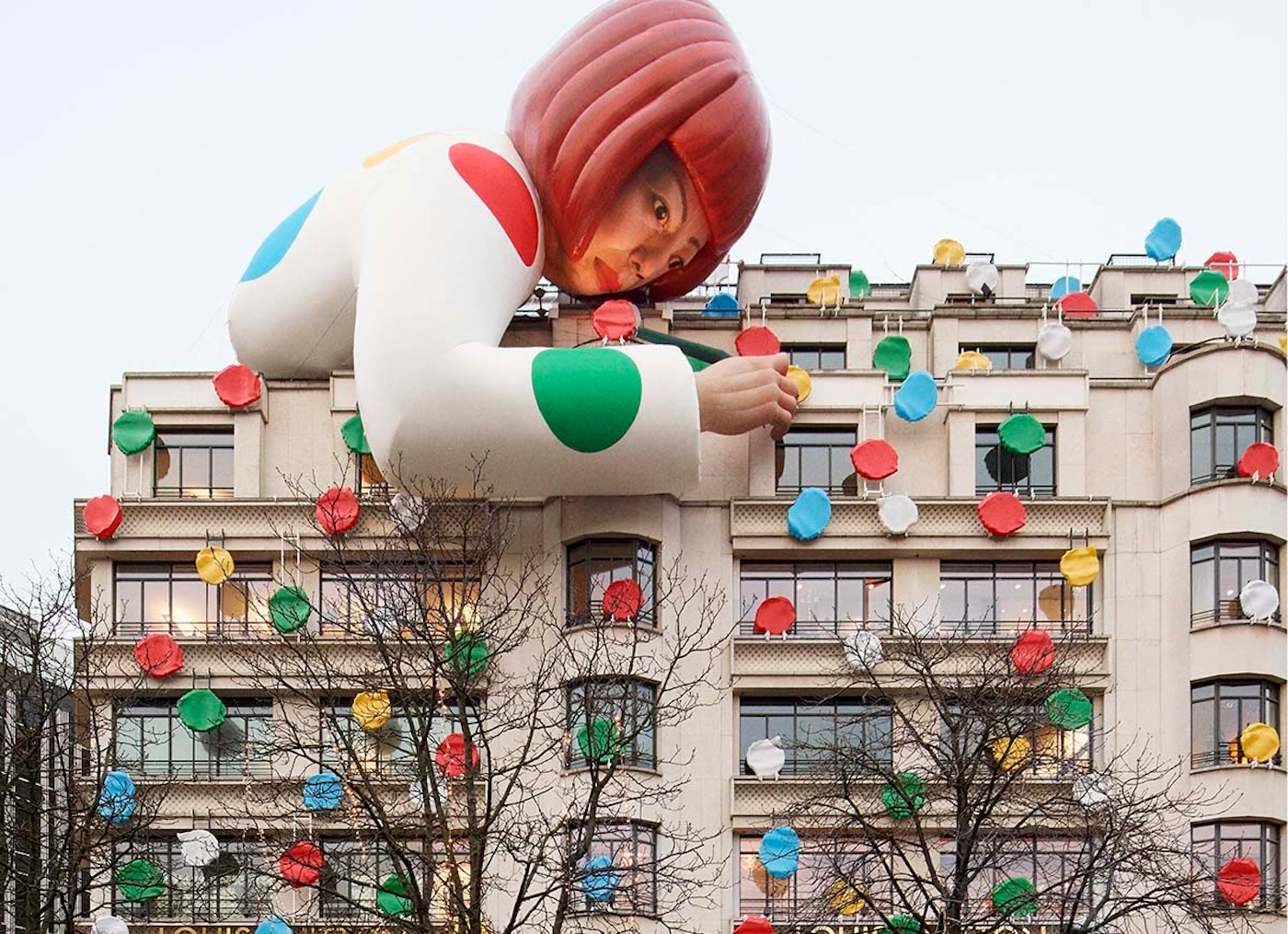
The 2023 Louis Vuitton and Yayoi Kusama collaboration treated the store itself as the canvas. As Dezeen documented, flagships worldwide were wrapped in Kusama's signature dots, with animatronic figures of the artist installed in windows and an inflatable Kusama peering over the roof of the Champs-Élysées store.
This is the collaboration as takeover. The product line ran to hundreds of pieces, but the thing people traveled to see was architectural. The Meatpacking District pop-up in New York coated its walls, floor, and ceiling in yellow and black dots, with chrome spheres arranged in the shape of the Louis Vuitton logo and suspended through the room.
What made it land was commitment to a single idea across every surface. The dots were not a graphic applied to a tote. They were the environment, the building, the sidewalk moment. The artist's obsession became the spatial language of the brand for a season.
The lesson is scale of conviction. A collaboration earns attention when it commits to its central idea completely, not when it hedges with a logo in the corner.
Gucci x The North Face: A Collaboration You Could Walk Inside
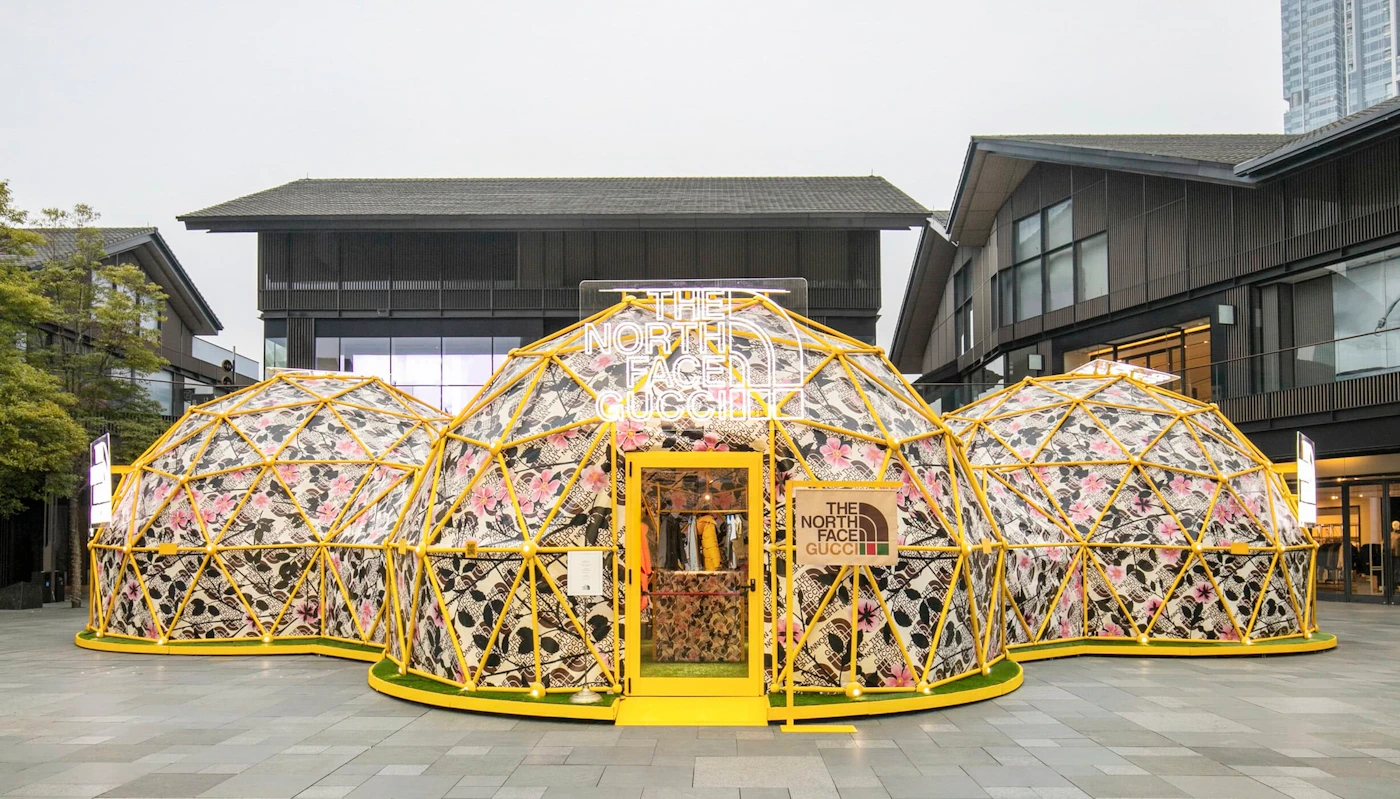
When Gucci and The North Face extended their partnership, they built it into the ground. The collaboration arrived through what Gucci called Pins, ephemeral stores designed as geodesic and domed structures meant to evoke landscape and travel, with spotlights recreating a starry sky as seen from inside a tent. Complex reported that the spaces layered in 8D audio of nature sounds triggered by a QR code, plus an augmented-reality tie-in with Niantic that placed collection items inside Pokémon GO.
The genius was thematic coherence. The North Face means the outdoors. Rather than print that idea on a jacket, the collaboration constructed the outdoors as a retail environment, sound and structure and light included.
A visitor did not look at the partnership. They entered it. That is the difference between a collaboration that decorates a store and one that becomes the store.
Building an environment this specific takes a team that can hold a creative idea and a construction schedule in the same hand. WONU's creative direction and spatial design practice is built on exactly that translation, from concept to a space people can stand inside.
Fendi x Versace "Fendace": The Collaboration WONU Built for Two Coasts at Once
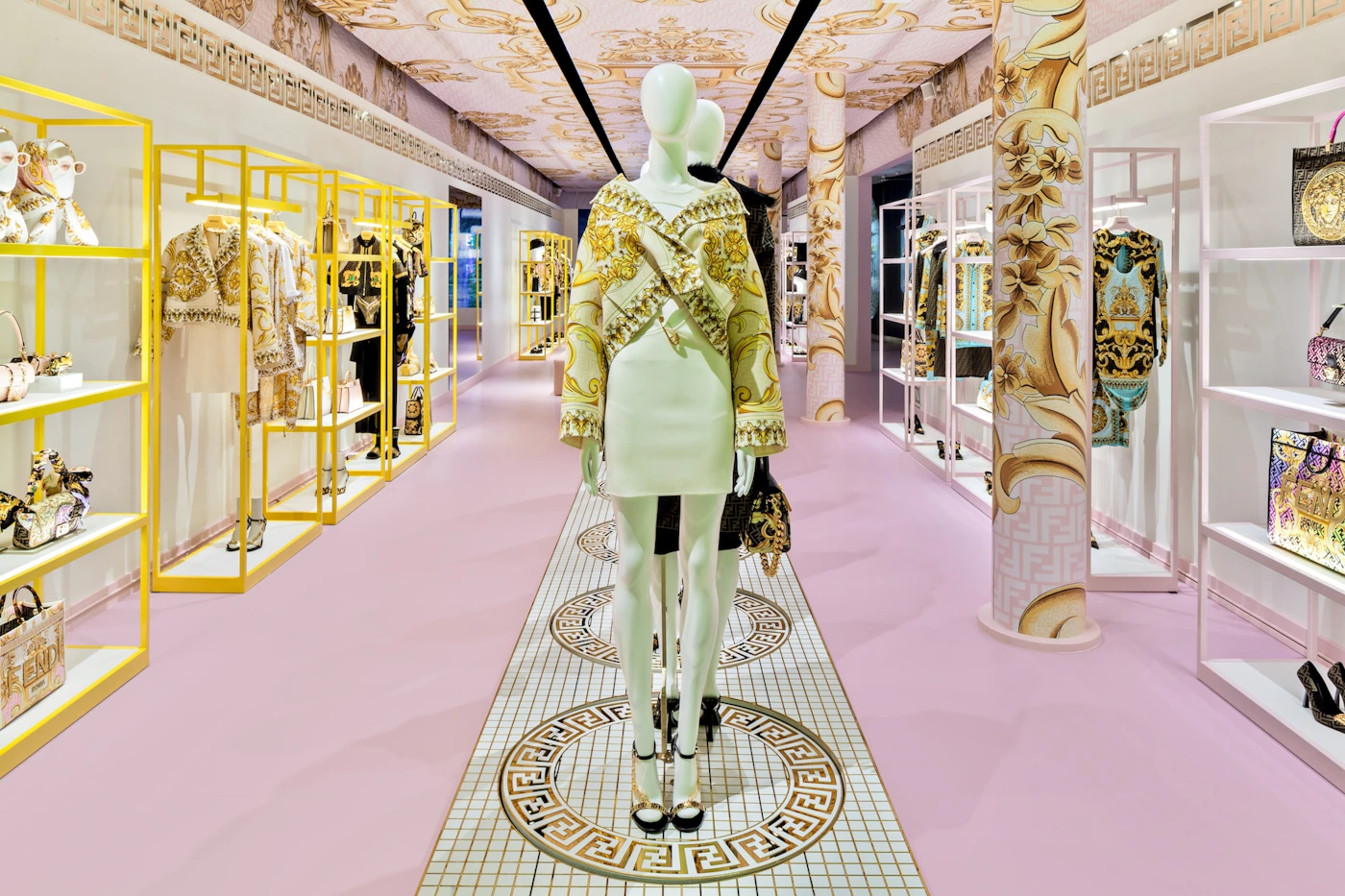
Few collaborations were louder in 2021 than Fendi and Versace swapping logos to create Fendace. The clothes were the headline. The American retail experience was a build, and WONU produced it.
WONU designed and executed the Fendace activation across Rodeo Drive in Los Angeles and SoHo in New York at the same time, as part of a year-long series of rotating Fendi pop-ups. The spaces carried a hand-sculpted foam facade, custom furniture and fixtures, custom fitting rooms, and a mirrored LED digital room. The full account lives in WONU's Fendace collaboration case study, and the project page documents the rotating-drop strategy that turned two storefronts into flagship venues for Fendi's most wanted collections.
The decision that mattered was treating the two coasts as one synchronized moment rather than a launch and a sequel. A collaboration this high-profile builds anticipation by appearing everywhere it should appear, on schedule, finished to the same standard.
That is a production problem before it is a creative one. Running a synchronized luxury activation across two cities is the kind of work WONU's production and project management practice exists to carry, where the calendar and the craft have to hold together under one timeline.
Supreme x Louis Vuitton: The Cautionary Collaboration
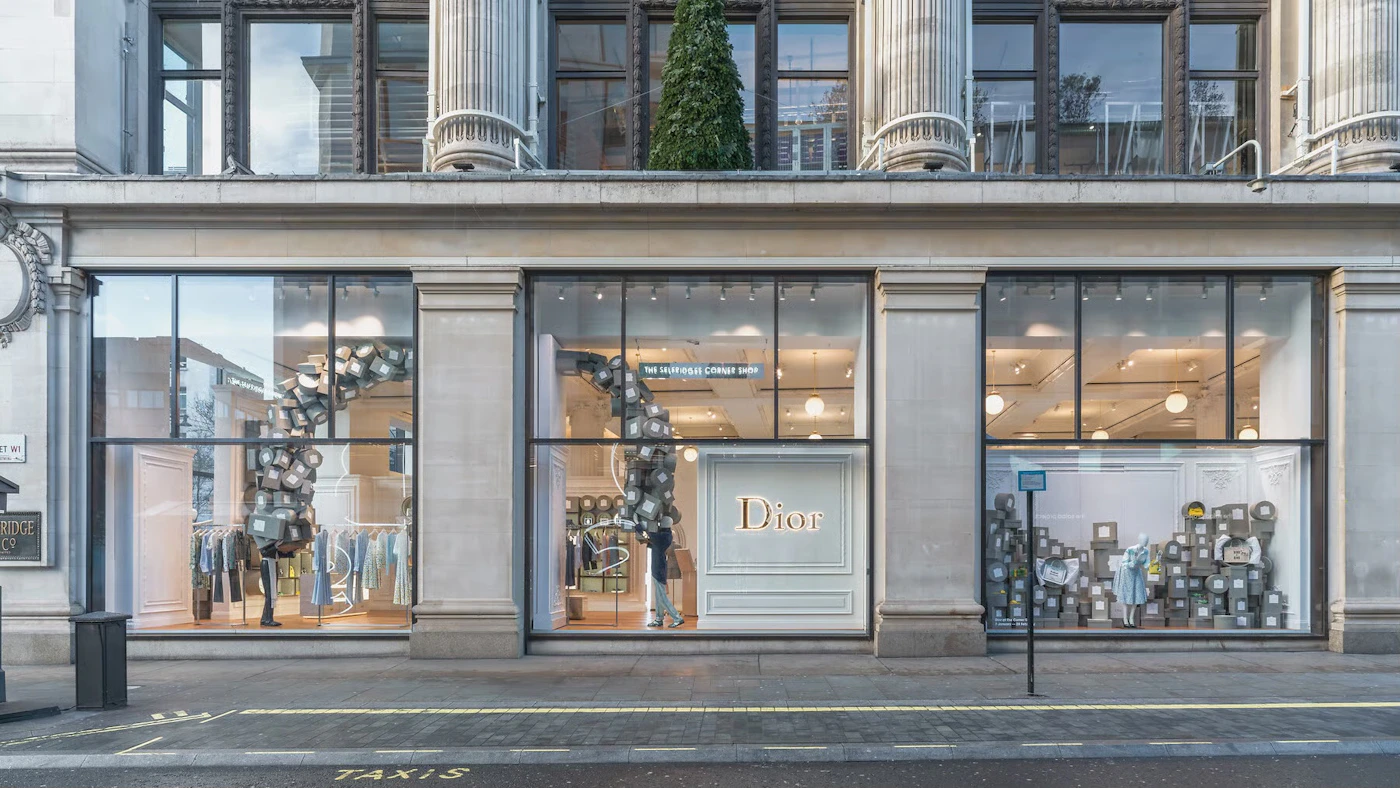
When Dior collaborated with Jordan Brand on Air Dior in 2020, the experience put the making on display. To mark the launch, Dior built a pop-up at Selfridges in London that, as WWD detailed, walked visitors through the manufacturing of the sneaker, from hand-painted edging to the Swoosh reworked in the Dior Oblique motif.
The spaces used glass, wood, and natural materials, with the craft of the collaboration treated as the thing worth exhibiting. This is the museum move. Rather than stage the product as merchandise, the collaboration staged it as an object of process, the way a gallery contextualizes a work before you see it.
It worked because the partnership had genuine craft to show. A heritage maison and a sneaker icon both trade on savoir-faire, and the experience made that shared value legible in the room.
The principle travels. When a collaboration has real material story to tell, the experience should reveal the how, not just present the what.
Nike x JD Sports in Chicago: The Collaboration That Activated a Retail Partner

Not every collaboration is two fashion houses. Some are a brand and the retail partner that sells it, and those can become experiences too. WONU ran a full-day takeover of JD Sports' State Street flagship in Chicago on April 5, 2025, reintroducing the Nike Air Max DN8 through a collaboration built around local creators.
Two Chicago creatives, Kristopher Kites and Serena Madrigal, led public customization workshops with charms and apparel, while evening programming brought DJ sets and nail and tooth-gem stations into the store. The activation, part of a four-week campaign, produced 1,295 RSVPs, more than three times the goal, made the DN8 the number-one Nike item sold on State Street that day, and earned 3M-plus paid impressions across the rollout. The project page documents the creator-led structure and community gifting in full.
The decision that drove it was making the retail partner the protagonist. The collaboration's job was to bring new energy into JD's flagship specifically, so the experience was designed to make a partner store feel culturally central, not incidental.
The second life on social was engineered from the floor plan, not added afterward. Designing an activation so its content travels is the heart of WONU's amplification strategy and content capture work, where the room and the feed are planned together.
What the Strongest Collaborations Have in Common
Read across these seven and a pattern surfaces. The collaborations people remember built something physical that carried the idea, whether that was a polka-dot building, a tent you could enter, a foam facade on two coasts, or a workshop that made a retail floor feel like a destination.
The ones that struggled were not short on demand or creative ambition. They were short on the experience layer, the logistics and spatial design that turn a cultural moment into a place that holds up under real traffic.
The same design discipline shows up in single-brand work, the kind broken down in WONU's look at five luxury pop-ups and the constraints each one had to solve. A collaboration just doubles the number of brand identities the room has to satisfy.
A collaboration is a promise that two brands are better together. The experience is where that promise either becomes true in a room or stays an idea on a press release.
FAQ
The Collaboration Outlives the Drop
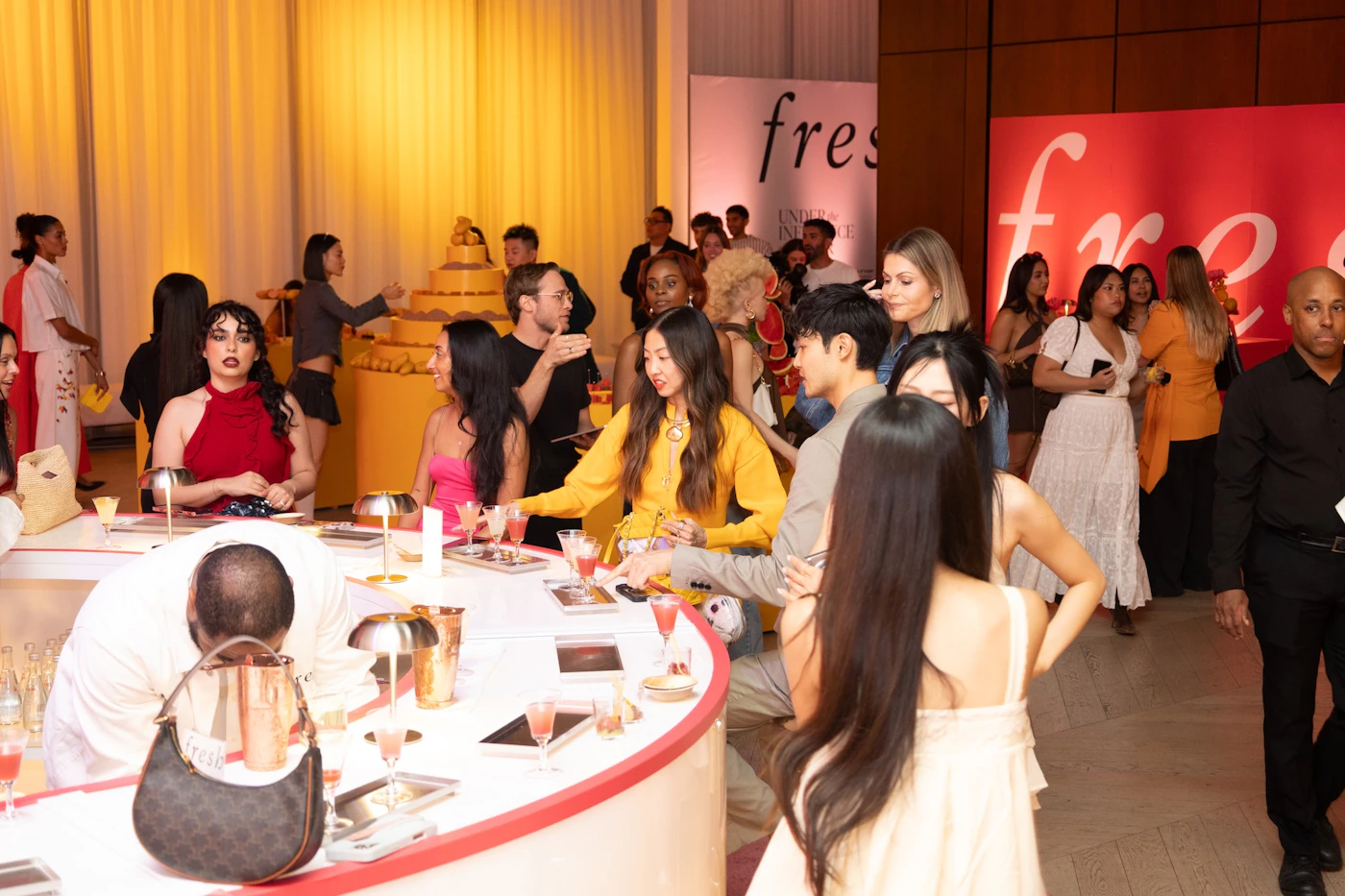
The product sells out. The space is what people carry. Every collaboration on this list proved that the partnership's real estate in cultural memory is the room, the line, the facade, the workshop, the thing you stood inside and remembered.
That is why the experience layer is not the finishing touch on a collaboration. It is the collaboration, made real at human scale, in a place someone can walk into.
The brands that get this right treat a partnership as a spatial and operational problem worth solving completely, from the first creative idea to the last logistical assumption. That is rarer than it sounds, and it is the difference between a drop and an experience.
If your brand is planning a collaboration and you want it to live as an experience, not just a press release, start a conversation with our team.
Let's build
If you're thinking about how your brand shows up in the world, we'd love to hear from you.