
What It Really Takes to Plan a Pop-Up Event in NYC
The souvenir shop on Canal Street still had its phone-case racks in the window the morning the crew arrived to gut it. By nightfall it would be a brand's market for New York Fashion Week, which is a fair picture of what it takes to plan a pop-up event in NYC. You rarely start with a room that wants to cooperate.
New York gives a pop-up its charge and most of its problems in the same breath. The addresses are tight, the freight elevators are shared, the permits answer to four agencies, and the best week to open is the same week every other brand wants the same crew.
That is the real work, and it happens long before anyone argues about wall colors. One recent launch in a Chelsea room with no kitchen still came in 11 percent over its attendance goal, because the plan solved the building before it styled the party.
What follows is how that plan actually comes together in this city.
What Makes Planning a Pop-Up Event in NYC Different From Anywhere Else?
Planning a pop-up event in NYC is harder than in most cities because the constraints stack: scarce and expensive space, a multi-agency permit process, freight rules that change block by block, and a calendar the whole industry fights over. The concept is the easy part. The city is the brief.

Start with permits. A temporary activation on or near a sidewalk can touch the Street Activity Permit Office, the FDNY, the Department of Buildings, and the NYPD, and a build inside a landmarked or historic space adds its own rules on what you can rig, drill, or cover.
Then there is the physical building. Many of New York's most interesting rooms are old, narrow, or shared, so the freight elevator, the load-in dock, and the power supply decide what you can build before the design does.
None of this shows up in the mood board. All of it shows up in the budget.
The Calendar Decides More Than the Concept
In New York, when you open matters as much as what you open. The city runs on a few dense windows, and a pop-up planned into the wrong one competes for the same trucks, the same crews, and the same press as everyone else.
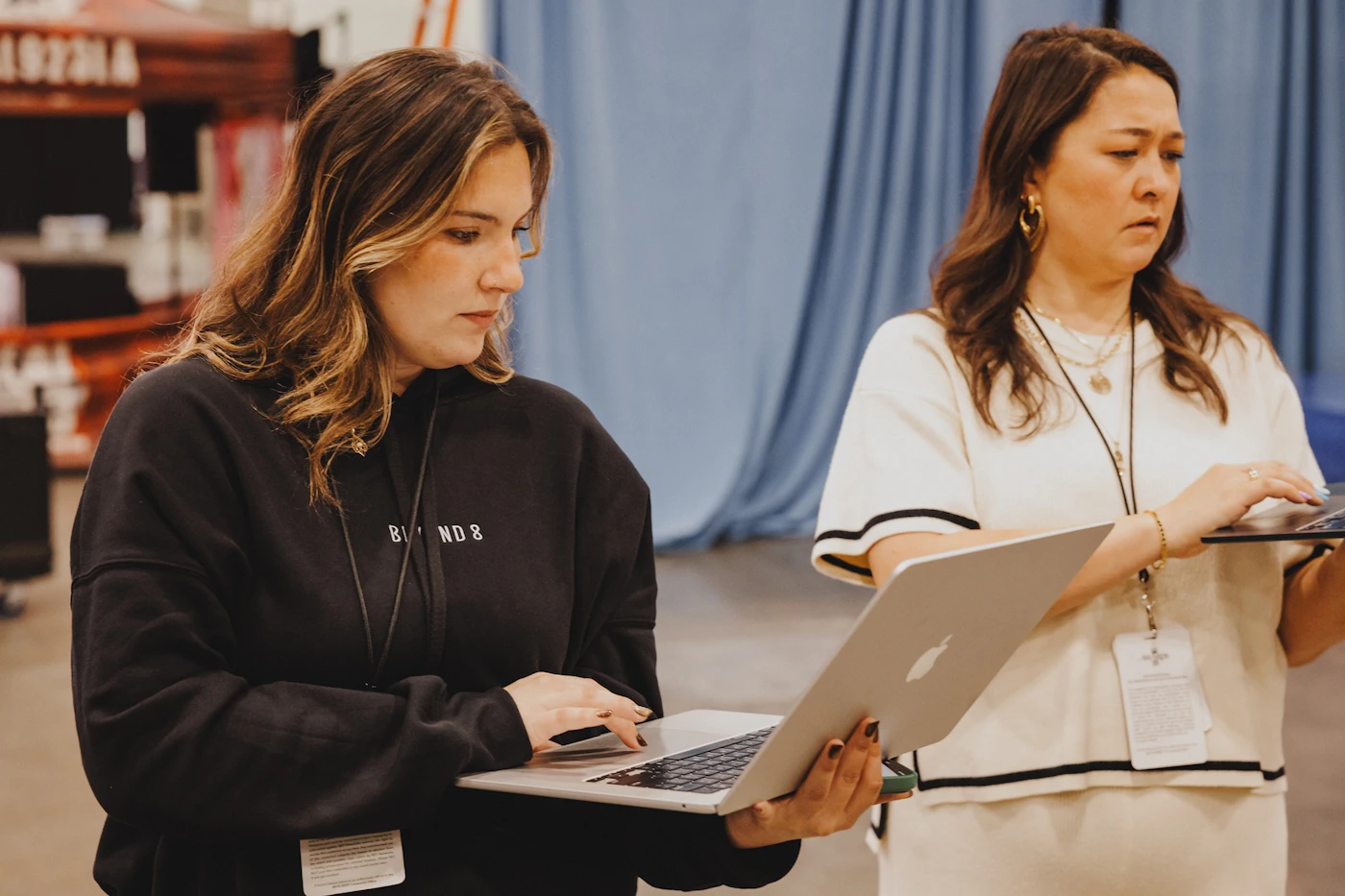
New York Fashion Week is the clearest example. During the official show calendar in February and September, production labor, rental inventory, and editor attention all tighten at once, which raises costs and lowers the odds your opening gets covered unless it is genuinely part of the conversation.
Pop-ups have become a permanent fixture on the retail calendar rather than the novelty they once were, which is part of why the good windows are so crowded. The holiday retail stretch brings the opposite pressure to Fashion Week: high foot traffic and gift intent, but venues booked months out and vendor calendars that fill early.
Timing a pop-up is really a decision about whether you want to ride a wave or have the water to yourself. The lead time follows from that, and a considered activation in a non-standard New York space usually needs months, not weeks.
Finding a Space That Can Actually Hold It
The most memorable New York pop-ups tend to happen in rooms built for something else, which is exactly why the space search is where planning gets real. A room with character usually comes with a temperament, and the job is to know the difference before signing.

For M.A.C Market, WONU took a Canal Street souvenir shop in Chinatown and turned it into a branded market during Fashion Week, keeping the block's tourist-retail energy instead of hiding it, then fitting in a gift shop of more than thirty custom pieces, a live-performance stage, a full bar, and a food truck. The footprint was one most brands would have walked past.
For Canada Goose, the space was an unused sushi-restaurant corner inside Bloomingdale's, rebuilt into a heritage room with edge-lit window towers, pull-out archive drawers, and a workshop counter where guests got complimentary customizations. Dead department-store square footage became a reason to stop walking.
The test in both cases was the same. Not whether the room looked good, but whether it could take the load, feed a crowd, and move people through it. Reading a space for that before the lease is signed is the center of WONU's creative direction and spatial design work.
Permits, Freight, and the Parts That Bite
The parts of a New York pop-up that cause the most damage are the ones with no glamour attached. A permit that comes back late, a freight window shorter than the build, a fire-code sign-off nobody scheduled: any one of them can move an opening date.
The freight reality is specific to the building. A raw loft may have the ceiling height a large build wants but a single small elevator shared with other tenants, so the load-in gets sequenced by the hour, overnight, with a union crew, and the whole schedule bends around it.
Permits run in parallel, not after. The smart plan files early, treats the city's agency process as a critical-path item, and keeps the build reversible enough to satisfy a landmarked space or a landlord who wants the room returned exactly as it was.
WONU has learned the expensive version of this, on a luxury rollout where a compressed timeline turned into repeated on-site repairs. Managing that gap between the plan and the room is the unglamorous core of WONU's production and project management practice.
Design It So People Participate, Not Just Visit
A pop-up that only asks to be photographed has a short life. The New York activations that keep paying off are the ones that give a visitor something to do, make, or join, so the audience becomes part of the moment instead of an audience for it.

This is where WONU's work has a clear point of view. The brand should sit in the background and the participation should come forward. At the Canada Goose pop-up, the workshop counter offering complimentary customizations did more for the brand than any display could, because a guest who personalizes a product has now spent real time with it.
The principle scales past a single counter. For a Nike launch with JD Sports, WONU built the activation around local creators customizing the product by hand before the doors opened, so the community made the moment and then carried it onto their own channels.
Designing that kind of participation into a floor plan, rather than bolting it on at the end, is what WONU's strategy and experiential marketing work is built to do.
How Do You Know a Pop-Up Actually Worked?
A pop-up worked when it moved the metrics the brand actually cares about, not just the ones that are easy to count. Foot traffic and photos are the floor. The real signals are attendance against goal, quality of dwell time, earned media, product sell-through, and whether the audience made and shared something.

Numbers help when they are honest. The fresh Black Tea Serum launch in a Chelsea LED room came in 11 percent over its attendance goal and generated 5.75 million impressions, but the more telling result was that guests stayed for the dinner rather than the door.
Set the measurement before the build, not after. Deciding which signals count, and instrumenting the room to capture them, is where WONU's measurement and reporting work earns its place in the plan.
Frequently Asked Questions
The City Is the First Collaborator
Every strong New York pop-up is a negotiation with the city before it is a conversation with the customer. The permits, the freight, the calendar, and the character of the room all shape what a brand can say before a single guest walks in.
The brands that do this well stop treating New York as a backdrop and start treating it as a collaborator with opinions. They plan for the building, protect the timeline, and design the experience so the audience has a hand in it.
That is harder than booking a pretty room, and it is also the whole point. A pop-up that respects the city tends to be the one the city remembers.
If you're planning a pop-up in New York and want a partner who starts with the building, talk to WONU.
Let's build
If you're thinking about how your brand shows up in the world, we'd love to hear from you.